
How to Get Your Miami-Dade Crash Report When the Other Driver Had No Insurance
After a crash in Miami-Dade, the agency that responded, Hialeah Police, the Miami-Dade Sheriff's Office, or FHP, files a crash report that you can order through the Florida Crash Portal (FLHSMV) for approximately $10 once it is available, usually within ten days. Under Fla. Stat. § 316.066, that report is confidential for 60 days and accessible only to the people involved, their insurers, and their lawyers, which means you can get it right away. The insurance section of the report is the document your own uninsured motorist (UM) carrier will use to confirm the other driver had no bodily injury coverage before paying your claim.
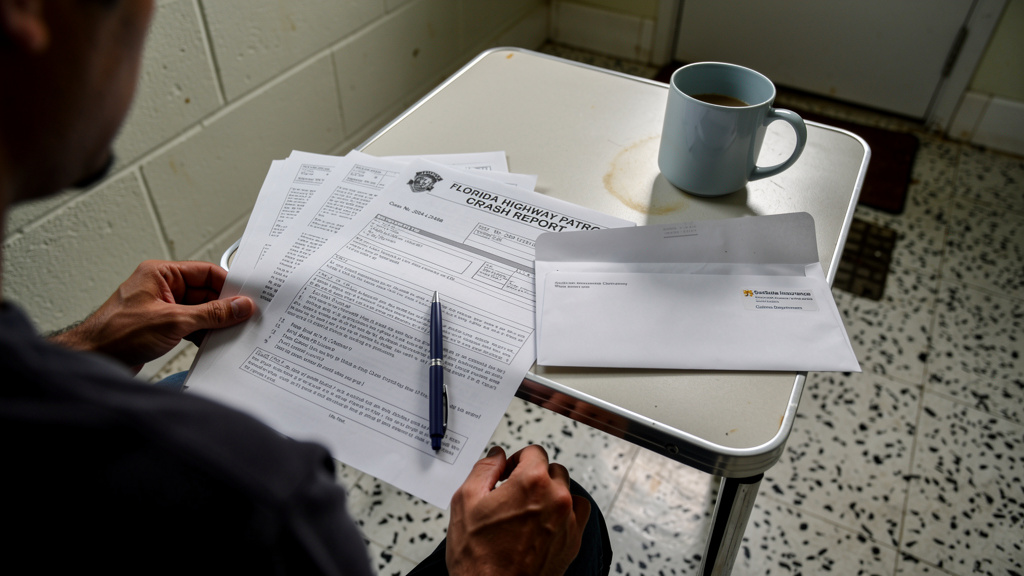
After a crash in Miami-Dade, the agency that responded, Hialeah Police, the Miami-Dade Sheriff’s Office, or the Florida Highway Patrol, files a crash report you can order through the Florida Crash Portal for about $10 once it appears online, usually within ten days. Under Florida law, that report is confidential for 60 days and available only to people involved in the crash, their insurers, and their lawyers, which means you can get it right away. The insurance section of the report is what your own uninsured motorist (UM) carrier will review to confirm the other driver had no bodily injury coverage before paying your claim.
Which agency filed the report, Hialeah Police, the Miami-Dade Sheriff, or FHP?
The agency that handled your crash depends on where it happened. Hialeah Police Department responds to crashes on city streets like W 49th St, Okeechobee Road, and W 68th St. The Miami-Dade Sheriff’s Office handles unincorporated areas of the county. Florida Highway Patrol typically responds to limited-access highways such as the Palmetto Expressway (SR 826) and I-75, though highway jurisdiction can sometimes overlap between agencies. The easiest way to know for sure is to ask the officer at the scene for their agency name and badge number. Once the report is filed, it will show a prefix indicating the agency, but all three file through the same state system and appear on the Florida Crash Portal.
How do you get the report number at the scene, and why does it matter?
Before you leave the crash scene, ask the responding officer for the agency name, their badge number, and the case or report number. Write it down. Do not rely on memory. Under Florida law, every driver must give their name, address, vehicle registration, and insurance information to the other party and to the officer. If police did not respond, possible in minor property damage crashes with no injuries, you still must exchange this information. If no officer files a report, you may need to submit a driver self-report to FLHSMV (the Driver Report of Traffic Crash), generally within 10 days. Confirm current form details directly with FLHSMV. Without a police report, your UM claim becomes harder to support, so always try to get an officer on scene if anyone is hurt.
How do you order the report from the Florida Crash Portal, and what does the 60-day rule mean for you?
Go to the Florida Crash Portal and create an account. You will need the crash date, Miami-Dade County, the report number if you have it, and at least one piece of party information such as a name, license plate, or date of birth. The fee is about $10 plus a $2 convenience charge; fees may change. Under Florida Statute § 316.066, the report is confidential for 60 days, but that restriction applies only to the general public. As someone involved in the crash, you can access it as soon as it uploads, usually within 10 days of the crash. After 60 days, it becomes public record and anyone can buy it. The confidentiality window protects you from solicitors, not from getting your own report.
What exactly should you look for in the report to prove the other driver had no insurance?
Check five key parts of the long-form crash report. First, the insurance block: if it lists no insurer, says “unknown,” or shows a policy number that later verifies as invalid, that supports your UM claim. Second, any citation for driving without insurance appears here and strengthens your position. Third, read the officer’s narrative, it may include the other driver admitting they had no coverage. Fourth, witness names and contact details can back up your version of events. Fifth, the crash diagram shows vehicle positions and helps counter arguments that you were partly at fault. If any field is wrong, wrong plate, wrong name, wrong insurer, contact an attorney right away. Errors delay claims and can weaken your case.
What if the other driver fled the scene? That is a hit-and-run, and it changes the claim.
Leaving the scene of a crash involving injury or death is a crime under Florida law. If the other driver flees, the crash report will classify it as such, and UM coverage generally treats an unidentified hit-and-run driver as uninsured. Your own UM coverage, if you bought it, becomes your primary path to recovery for pain, suffering, and damages beyond PIP. At the scene, note the fleeing vehicle’s color, make, direction, and partial plate if possible. Take photos immediately and call 911. Do not chase. The officer’s report is critical for your UM claim, and your policy may require prompt notice, so contact your insurer and a lawyer as soon as possible.
How does the crash report actually get used in your UM claim?
When you file a claim under your uninsured motorist coverage, your insurer steps into the shoes of the at-fault driver and reviews the same evidence a court would. The crash report is their first source to verify the crash occurred, identify the at-fault driver, and confirm lack of insurance. It also shows citations and the officer’s narrative, which help counter attempts to blame you under Florida’s modified comparative negligence rule. Remember, PIP pays 80% of reasonable medical bills and 60% of lost wages, up to $10,000 (only $2,500 without an emergency medical condition), regardless of fault, but it does not cover pain and suffering. To recover for those losses, your injury must meet Florida’s permanent injury threshold. For crashes on or after March 24, 2023, you have two years from the crash date to sue the at-fault driver for negligence; a lawsuit against your own UM insurer may follow a different deadline, so ask a lawyer early if your UM claim is denied or undervalued. For help understanding your report and next steps, contact Wolfson & Leon for a free consultation.
Frequently asked questions
I was hit by a driver with no insurance on Okeechobee Road in Hialeah, who do I call to get the report?
Okeechobee Road in Hialeah is within city limits, so Hialeah Police likely handled the crash. You do not call them directly to get the report. Instead, wait for it to appear on the Florida Crash Portal, usually within 10 days, and order it there using your crash details.
The other driver said they had insurance but I think they lied, how does the crash report help me prove it?
The report includes the insurance information the other driver gave the officer. If that policy does not exist or comes back invalid when your attorney checks, the blank or false entry becomes documented proof supporting your UM claim.
No police came to my crash scene, do I still have a record I can use for my insurance claim?
You may need to file a driver self-report with FLHSMV, generally within 10 days; confirm current requirements with FLHSMV. Without a police report or a self-report, your UM claim can be harder to prove. Always try to get an officer on scene if there are any injuries.
Will my own insurance rates go up if I file a UM claim after being hit by an uninsured driver?
Whether a not-at-fault UM claim can affect your rates depends on Florida insurance rules and your insurer’s practices, and policies vary. Ask your agent directly, and consider consulting a lawyer before giving any recorded statement.
How long do I have to file a lawsuit if my UM insurer refuses to pay fairly?
For crashes on or after March 24, 2023, you have two years from the crash date to file a lawsuit under Florida Statute § 95.11. A lawsuit against your own insurer over a UM claim may follow a different deadline, so confirm it with a lawyer and do not wait.
Related reading: The driver who hit me in Hialeah has no insurance. What now? · Crashed on the Palmetto Expressway or Okeechobee Road: what to do in the first hour · The 14-day PIP rule in Florida: what happens if you wait to see a doctor after a Hialeah car accident
Hurt in an accident in Hialeah? Call Wolfson & Leon at (305) 285-7071 for a free consultation. We speak Spanish, and there is no fee unless we win.
Key facts
- Crash reports are confidential for 60 days after filing; during that window only the involved parties, their attorneys, and their insurers may obtain a copy. Source: Fla. Stat. § 316.066
- Officers generally have 10 days to file the long-form crash report with FLHSMV; the report then appears on the Florida Crash Portal, typically within 10 days of the crash. Source: Fla. Stat. § 316.066(1)
- Leaving the scene of a crash that causes injury or death is a criminal offense under Florida law. Source: Fla. Stat. § 316.027
- Every driver involved in a reportable crash must give their name, address, vehicle registration, and insurance information to the other party and to any responding officer. Source: Fla. Stat. § 316.062
- Uninsured motorist (UM) coverage is optional in Florida and must be rejected in writing; when the at-fault driver has no bodily injury coverage, UM is typically the primary source of recovery for pain, suffering, and damages beyond PIP. Source: Fla. Stat. § 627.727
Frequently asked questions
I was hit by a driver with no insurance on Okeechobee Road in Hialeah, who do I call to get the report?
A crash on Okeechobee Road within Hialeah city limits is typically handled by the Hialeah Police Department. Ask the responding officer for the case number before you leave the scene, then order the report through the Florida Crash Portal once it is available, usually within about ten days. As one of the parties involved, you can access the report immediately even during the 60-day confidentiality period under Fla. Stat. § 316.066.
The other driver said they had insurance but I think they lied, how does the crash report help me prove it?
The insurance information block on the Florida crash report shows whatever policy details the other driver gave the officer. If that policy number comes back invalid or the insurer denies coverage, that discrepancy, combined with the officer's record of what was provided, documents the misrepresentation. Your attorney can then send a coverage-verification letter to the listed insurer and use the report to support your uninsured motorist (UM) claim under Fla. Stat. § 627.727. Review the report the moment it is available and flag any errors to your attorney right away.
No police came to my crash scene, do I still have a record I can use for my insurance claim?
Yes, but you need to act immediately. First, make sure you exchanged names, addresses, vehicle registration information, and insurance information at the scene as required by Fla. Stat. § 316.062. If no officer-prepared report was filed, you may need to submit a written driver self-report to FLHSMV, generally within 10 days of the crash; confirm current requirements with FLHSMV. Photograph everything, collect witness contact information, and seek medical care within 14 days to preserve your PIP benefits under Fla. Stat. § 627.736, missing that window means PIP pays nothing, regardless of how serious the injury turns out to be.
Will my own insurance rates go up if I file a UM claim after being hit by an uninsured driver?
Whether a UM claim can affect your rates depends on Florida insurance rules and your insurer, and many drivers understandably feel frustrated after paying for this coverage. However, this is a policy and business question that varies by insurer, not a fixed legal rule this firm can answer for your specific policy. What the law does guarantee is that your insurer cannot simply deny a UM claim because you chose not to sue the uninsured driver directly; the coverage exists precisely for this situation. Review your declarations page and policy language, and speak with an attorney before assuming any coverage limit or rate consequence.
How long do I have to file a lawsuit if my UM insurer refuses to pay fairly?
For crashes that occurred on or after March 24, 2023, Florida's statute of limitations for a negligence-based personal injury lawsuit is two years from the date of the crash under Fla. Stat. § 95.11; a lawsuit against your own UM insurer is based on your insurance contract and may follow a different deadline, so confirm it with a lawyer. Missing that deadline will bar your claim entirely regardless of how serious the injuries are. Do not wait to consult an attorney, evidence fades, witnesses become harder to locate, and insurance companies begin building their defense the moment the claim is filed.
This article is general information about Florida law, not legal advice, and reading it does not create an attorney-client relationship. Every case is different and past results do not guarantee a similar outcome. For advice about your situation, call Wolfson & Leon at (305) 285-7071 for a free consultation.
Also available in: Versión en español
 Personal injury
 Florida's Serious Injury Threshold: When Can You Sue for Pain and Suffering?
Florida law bars you from suing the at-fault driver for pain and suffering unless your injury falls into one of four categories defined in Fla.…
 Personal injury
 How Soon After an Accident Should You Talk to a Lawyer in Florida?
Call before you talk to any insurance adjuster, ideally within the first few days after getting medical care. Multiple legal clocks start on the day…
 Personal injury
 Which Insurance Pays After a Rear-End Crash in Florida, and in What Order?
In Florida, your own PIP coverage pays first, 80 percent of medical bills and 60 percent of lost wages, up to $10,000, regardless of who caused the…