
What Insurance Does Florida Actually Require to Register and Ride a Motorcycle?
Florida generally does not require a motorcycle owner to carry an insurance policy to register or ride a bike, because motorcycles fall outside the PIP requirement, and generally the property-damage liability requirement, that apply to four-wheeled vehicles. That said, Florida's financial-responsibility law can lead to license suspension for an uninsured rider involved in a crash, and the rider may then have to show proof of liability coverage. The one insurance requirement hiding in plain sight is the helmet law: riders 21 and older who want to ride without a helmet must carry at least $10,000 in medical benefits coverage under Fla. Stat. § 316.211(3)(b).
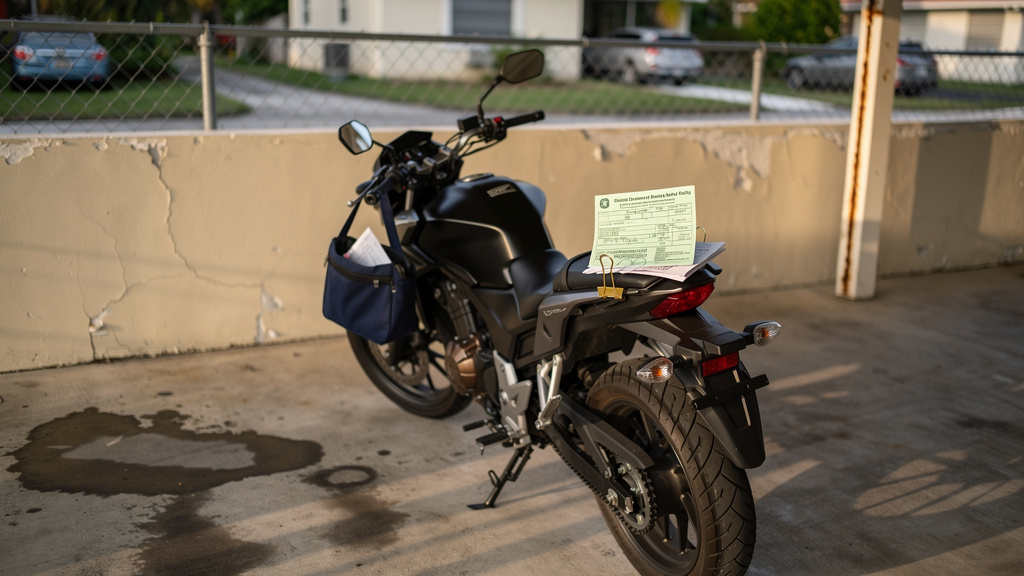
Florida generally does not require motorcycle owners to carry insurance to register or ride. Unlike cars, motorcycles are excluded from the state’s no-fault PIP system because Florida’s PIP law defines a covered “motor vehicle” as one with four or more wheels, and the property-damage liability requirement generally does not apply to them either. However, if you are involved in a crash while uninsured, Florida’s financial-responsibility law can lead to a license suspension and may require you to show proof of liability insurance. And if you want to ride without a helmet and you’re 21 or older, you must have at least $10,000 in medical benefits coverage under Fla. Stat. § 316.211(3)(b).
Is PIP required for a motorcycle in Florida?
No. Florida’s Personal Injury Protection (PIP) system does not cover motorcycles. PIP is part of the state’s no-fault insurance rules, which apply only to vehicles with four or more wheels, per Fla. Stat. § 627.732(3). For car occupants, PIP pays 80 percent of reasonable medical bills and 60 percent of lost wages, up to $10,000 with an emergency medical condition (otherwise $2,500), regardless of who caused the crash. Motorcyclists get none of this automatic coverage. Even if a car hits you, PIP does not cover a rider injured on a motorcycle, so neither that car’s PIP nor your own car policy’s PIP will pay your medical bills. Riders usually rely on the at-fault driver’s bodily injury coverage, their own UM coverage, health insurance, or optional medical payments coverage. Learn more about Florida’s 14-day PIP rule.
Do you need insurance to register a motorcycle in Florida?
Generally, no insurance document is required to register a motorcycle in Florida. The registration mandates for PIP and property-damage liability are generally understood to apply only to four-wheeled vehicles, so motorcycles are typically exempt at the tag office. But “no registration requirement” does not mean “no legal or financial risk.” Florida’s financial-responsibility law (Chapter 324) does reach motorcycles, even if it doesn’t trigger at registration. After an at-fault injury crash, the state can demand proof of future liability coverage. Without a policy, your savings become your only protection, and if you hurt someone, you can be sued personally for all their damages. The legal reality is simple: you can register a bike without insurance, but you cannot safely ride without it.
What is the helmet-insurance rule, and who does it actually apply to?
Florida’s helmet law has one narrow exception tied to insurance. All riders must wear a helmet unless they are 21 or older and covered by a policy that provides at least $10,000 in medical benefits for motorcycle crash injuries, per Fla. Stat. § 316.211(3)(b). The law does not specify what type of policy qualifies, but most riders use a MedPay endorsement on their motorcycle insurance. Health insurance may satisfy the requirement, but you should get written confirmation from your insurer. Importantly, a PIP policy from your car does not count for this purpose, according to FLHSMV guidance. And while $10,000 meets the legal minimum, serious crashes often cost far more, a single head injury can run six figures.
Do you need a motorcycle endorsement to ride legally in Florida?
Yes. A standard Florida driver’s license is not enough. You must have a motorcycle endorsement to operate a motorcycle legally, as required by Fla. Stat. § 322.12(5). This is a licensing rule, not an insurance rule, but it is mandatory. Riding without the endorsement can lead to citations and fines.
What changes after a crash, can Florida force you to get insurance then?
Possibly. If you are involved in a crash while uninsured, Florida’s financial-responsibility law (Chapter 324) can lead to suspension of your license and registration, and getting them back may require proof of liability insurance, reinstatement fees, or other steps, depending on the circumstances. The details depend on the crash and your record, so confirm your situation with FLHSMV. Meanwhile, if someone else hits you, you have two years from the crash date (for injuries on or after March 24, 2023) to file a negligence lawsuit under Fla. Stat. § 95.11. Waiting too long ends your right to sue, even if you’re still healing.
What coverage should a Hialeah rider actually carry, even though Florida doesn’t require it?
Just because Florida doesn’t require motorcycle insurance doesn’t mean you shouldn’t buy it, especially in Miami-Dade, where many drivers carry no bodily injury liability coverage. The most important optional coverage is Uninsured/Underinsured Motorist (UM/UIM), governed by Fla. Stat. § 627.727. UM pays your medical bills, lost wages, and pain and suffering if you’re hit by a driver with no or too little insurance. It must be offered by your insurer and can only be rejected in writing. Because Florida doesn’t force car drivers to carry bodily injury coverage, UM is often your only real path to recovery. Medical Payments (MedPay) coverage fills the PIP gap and can satisfy the helmet-law requirement. Bodily injury liability protects you if you hurt someone else; consider limits high enough to protect your savings. Finally, ask about stacked UM: under Fla. Stat. § 627.727(9), stacking multiplies your UM limit by the number of vehicles on your policy, giving you more protection for little extra cost. Remember, whether Florida’s permanent-injury threshold for pain and suffering (Fla. Stat. § 627.737(2)) affects a motorcycle claim depends on the coverage involved, so have an attorney review it. And under modified comparative negligence, your recovery drops if you share fault, but you’re barred only if you’re more than 50 percent at fault. Explore options for motorcycle accident claims and uninsured motorist coverage.
Frequently asked questions
Can I get a ticket in Florida for riding without motorcycle insurance?
No, not just for lacking insurance. Florida does not require motorcycle insurance to ride, so there’s no direct ticket for being uninsured. However, if you cause a crash, you can face license suspension, fines, and personal liability for all damages.
If I’m hit by a car while riding my motorcycle, does the car driver’s PIP cover my injuries?
No. PIP does not cover a rider injured on a motorcycle, so you get no PIP benefits from the other driver’s policy or your own. Your recovery usually comes from the at-fault driver’s bodily injury coverage, your own UM coverage, health insurance, or medical payments coverage.
What happens if the driver who hit my motorcycle has no bodily injury insurance?
You may have no recovery from their insurance. Since Florida doesn’t require car drivers to carry bodily injury coverage, many don’t. That’s why your own UM coverage is critical, it becomes your primary source for medical bills, lost wages, and pain and suffering.
Does the $10,000 medical-benefits requirement for riding without a helmet have to come from a motorcycle policy specifically?
Not necessarily. The statute doesn’t specify the policy type, but it must provide at least $10,000 in medical benefits for motorcycle crash injuries. Many use a MedPay endorsement on their motorcycle policy. Car PIP policies do not count, per FLHSMV. Confirm in writing with your insurer that your coverage qualifies.
What is stacked UM coverage and should a Hialeah motorcycle rider choose it?
Stacked UM multiplies your per-person UM limit by the number of vehicles on your policy. For example, $25,000 in UM on two bikes becomes $50,000 with stacking. Florida law requires insurers to offer it, and you must waive it in writing to lose it. In high-risk areas like Hialeah, stacking gives significantly more protection for a modest premium increase.
Hurt in an accident in Hialeah? Call Wolfson & Leon at (305) 285-7071 for a free consultation. We speak Spanish, and there is no fee unless we win.
Key facts
- Motorcycles are excluded from Florida's no-fault PIP system because the statute defines a covered 'motor vehicle' as one with four or more wheels. Source: Fla. Stat. § 627.732(3)
- A rider 21 or older may legally ride without a helmet only if covered by a policy providing at least $10,000 in medical benefits for motorcycle crash injuries. Source: Fla. Stat. § 316.211(3)(b)
- After certain crashes, Florida's financial-responsibility law can require an uninsured vehicle owner to show proof of liability coverage, and failing to do so can lead to suspension of the license and registration. Source: Fla. Stat. § 324.022
- Operating a motorcycle legally in Florida requires a motorcycle endorsement on the rider's license. Source: Fla. Stat. § 322.12(5)
- UM/UIM coverage is not required but must be offered; it can only be declined by a named insured's written rejection on an OIR-approved form. Source: Fla. Stat. § 627.727
Frequently asked questions
Can I get a ticket in Florida for riding without motorcycle insurance?
Florida does not require a motorcycle liability policy to register or ride, so there is no registration-time insurance check and no standalone 'no insurance' ticket in the same way car drivers face one. However, if you cause an at-fault injury crash without coverage, Florida's financial-responsibility law can suspend your license and registration and may require you to show proof of liability coverage afterward. The helmet-law medical-benefits requirement under Fla. Stat. § 316.211(3)(b) is the one instance where riding without qualifying insurance, while helmetless and 21 or older, creates a direct traffic-law violation.
If I'm hit by a car while riding my motorcycle, does the car driver's PIP cover my injuries?
No. Florida's PIP system covers the injured person's own PIP policy first, then a household relative's PIP, and only in narrow circumstances a pedestrian or cyclist with no household PIP coverage may access the striking vehicle's PIP, and even then the rule is limited. Because motorcycles are excluded from the no-fault system under Fla. Stat. § 627.732(3), you will not have your own motorcycle PIP to draw on. Your primary recovery paths are the at-fault driver's bodily injury liability coverage, your own UM/UIM policy under Fla. Stat. § 627.727, and any MedPay endorsement on your motorcycle policy.
What happens if the driver who hit my motorcycle has no bodily injury insurance?
Florida does not require car drivers to carry bodily injury liability coverage, and a significant share of Miami-Dade drivers carry none. If the at-fault driver is uninsured or underinsured and you have UM/UIM coverage on your motorcycle policy under Fla. Stat. § 627.727, your own insurer steps in to cover your medical bills, lost wages, and, depending on your injuries and policy, pain and suffering. Without UM coverage, your practical options shrink to a lawsuit against a driver who may have nothing collectible. A personal injury attorney can evaluate whether any other coverage sources exist; a negligence lawsuit against the at-fault driver generally must be filed within two years under Fla. Stat. § 95.11, while a UM claim against your own insurer is governed by a different deadline.
Does the $10,000 medical-benefits requirement for riding without a helmet have to come from a motorcycle policy specifically?
Fla. Stat. § 316.211(3)(b) requires coverage from 'an insurance policy providing for at least $10,000 in medical benefits for injuries incurred as a result of a crash while operating or riding on a motorcycle', it does not name a specific policy type. FLHSMV guidance indicates that PIP from a personal passenger vehicle policy does not satisfy this requirement for the motorcycle operator or passenger. Riders most commonly satisfy it with a MedPay endorsement on the motorcycle policy or qualifying health insurance; confirm in writing with your insurer that your specific coverage meets the standard before relying on it to ride helmetless.
What is stacked UM coverage and should a Hialeah motorcycle rider choose it?
Stacked uninsured motorist coverage, available under Fla. Stat. § 627.727(9), multiplies your UM limit by the number of vehicles listed on the policy, giving you a larger pool of coverage if you are seriously injured by an uninsured or underinsured driver. Because Florida does not require drivers to carry bodily injury liability and many Miami-Dade drivers carry no BI coverage, stacked UM is often the most meaningful financial protection a Hialeah rider can buy. It costs more than unstacked UM and must be affirmatively waived in writing if you decline it; many riders waive it without realizing what they are giving up.
This article is general information about Florida law, not legal advice, and reading it does not create an attorney-client relationship. Every case is different and past results do not guarantee a similar outcome. For advice about your situation, call Wolfson & Leon at (305) 285-7071 for a free consultation.
Also available in: Versión en español
 Motorcycle accidents
 I Need a Motorcycle Accident Attorney in Hialeah: How Do I Start?
The path from 'I need a lawyer' to 'my lawyer is handling it' has five concrete steps: get medical care, gather what you already have, make one…
 Motorcycle accidents
 Motorcycle Accident in Florida With No Insurance: What Happens Next
Yes, you can still file a claim against the driver who caused the crash even if you were riding uninsured, Florida's fault-based system for…
 Motorcycle accidents
 I wasn't wearing a helmet. Can I still bring a motorcycle accident claim in Florida?
Yes. Florida law allows riders 21 and older to ride without a helmet if they carry at least $10,000 in medical benefits coverage (Fla. Stat. §…