
Crashed Your Motorcycle in Florida With No Insurance: What Happens Next
You can still file a claim against the driver who caused the crash even if you were riding without insurance, Florida's fault-based system applies to motorcycles, and the other driver's bodily injury liability coverage is your primary source of compensation for medical bills, lost wages, and pain and suffering. Florida does not require motorcycle riders to carry PIP, so riders usually have no PIP benefits, and your claim depends on proving the other driver was at fault, not on whether you carried a policy. Being uninsured does trigger administrative consequences with FLHSMV, but it does not erase your right to pursue the at-fault driver.
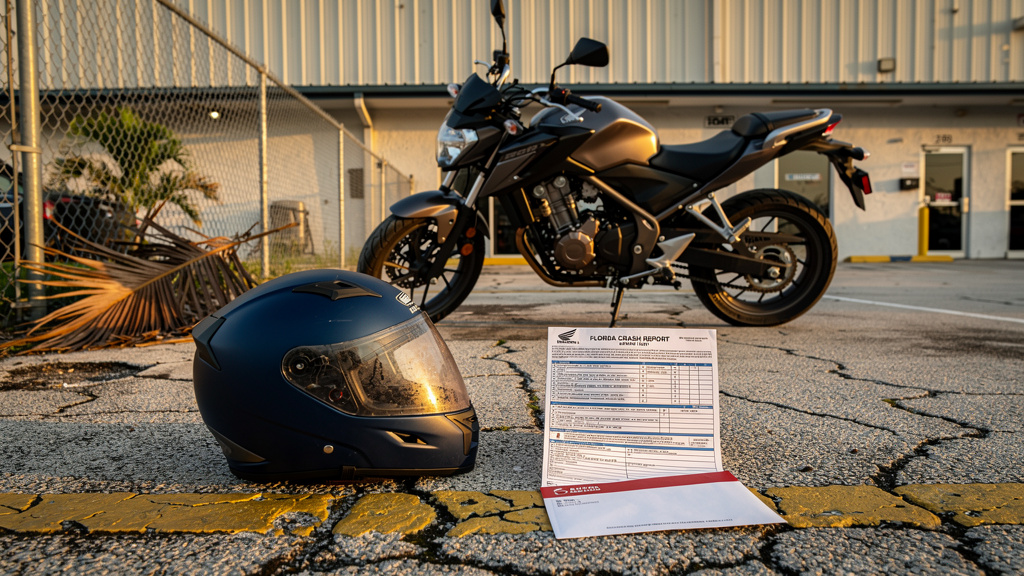
If you crashed your motorcycle in Florida without insurance, you can still file a claim against the driver who caused the crash. Florida does not require motorcycle riders to carry PIP, so riders usually have no PIP benefits, which means your claim depends on proving the other driver was at fault, not on whether you carried a policy.
I crashed my motorcycle in Florida and have no insurance, can I still get compensated?
Riders usually have no PIP benefits after a crash. That cuts both ways: PIP is usually not available to you, but the absence of a personal policy also does not erase your right to pursue the at-fault driver. The at-fault driver’s bodily injury liability insurance is your primary source of recovery for medical bills, lost wages, and pain and suffering.
Here is the complication: Florida does not require most drivers to carry bodily injury liability coverage. That source may be limited or absent. If you purchased uninsured or underinsured motorist coverage (UM/UIM) on a motorcycle policy before the crash, or if a relative in your household carries stacked UM on a car policy, that coverage becomes critical under Fla. Stat. § 627.727. Pulling every policy in the household is one of the first things an attorney will do.
The idea floating around online that an uninsured rider cannot recover anything, or that Florida’s no-fault system makes fault irrelevant for motorcyclists, is wrong on both counts. For riders, fault has always been the question. How motorcycle injury claims work in Florida goes into more detail on how that process moves.
What should I do right now, step by step?
-
Stay at the scene. Leaving the scene of a crash involving injury or death is a felony under Fla. Stat. § 316.027.
-
Call 911. Florida law requires drivers involved in a crash to give their name, address, and vehicle registration number under Fla. Stat. § 316.062. Exchange insurance information too.
-
Get medical care immediately. You do not have to leave by ambulance, but see a doctor the same day or the next morning. Every day you wait gives the other driver’s insurer a reason to argue your injuries came from something else.
-
Get the crash report number. Request it from Hialeah Police Department or the Florida Highway Patrol. The report is confidential for 60 days under Fla. Stat. § 316.066, but you, your insurer, and your attorney can access it.
-
Do not give a recorded statement to the other driver’s insurance company before you speak with an attorney. They will use your words to reduce what they pay.
-
Pull every auto insurance policy in the household. A relative’s car policy may carry stacked UM coverage that follows you onto the motorcycle.
-
Note your filing deadline. For crashes on or after March 24, 2023, you have two years to file a lawsuit under Fla. Stat. § 95.11. That clock does not pause during negotiations.
Refusing an ambulance at the scene does not automatically end your claim. It does make proof harder. See a doctor before the end of the day.
What does Florida law actually say about riding uninsured?
Florida does not require motorcycle riders to carry PIP the way it requires car owners to, so riders usually have no PIP. Florida’s insurance rules for motorcycles differ from the rules for cars.
That changes after a crash involving injuries. After a crash, FLHSMV has authority under Chapter 324 of Florida law to require you to purchase liability coverage, file an SR-22 certificate, maintain that coverage for a set period, and pay a reinstatement fee. Ignoring those requirements leads to license suspension.
If you were 21 or older and riding without a helmet, Fla. Stat. § 316.211(3)(b) required you to carry at least $10,000 in medical benefits coverage. Riding helmet-free without that coverage can affect your claim, particularly if you suffered head injuries.
Fault is governed by Fla. Stat. § 768.81(6). Your recovery is reduced by your share of fault. You are barred from recovering only if you are found more than 50 percent at fault. Riding without insurance is not negligence by itself. Fault is based on what you and the other driver did on the road, not on what insurance you carried.
For many crash claims, Florida limits pain and suffering damages against the at-fault driver to cases involving a permanent injury, significant permanent scarring or disfigurement, or significant permanent loss of an important bodily function under Fla. Stat. § 627.737(2). Whether and how that threshold applies to a rider’s claim is a question to ask a lawyer about your motorcycle accident claim in Florida.
Who actually pays my medical bills and other losses?
Source 1: The at-fault driver’s bodily injury liability insurance. This is your primary target, but it does not pay upfront. It pays after a settlement or a verdict. Florida does not require most drivers to carry it, so it may not exist at all.
Source 2: Your own UM/UIM coverage under Fla. Stat. § 627.727. If you bought it before the crash, it can cover the gap left by an uninsured or underinsured driver. Whether UM coverage applies while you are riding depends on the policy terms, including whether you chose stacked or non-stacked coverage (a non-stacked option requires your informed written selection under Fla. Stat. § 627.727(9)). A UM policy that was not rejected in writing is presumed to remain on the policy.
Source 3: A household relative’s UM coverage. Pull every policy in the home. This is not optional.
Source 4: Your own health insurance. It may cover treatment, but it will almost certainly seek repayment from any settlement you receive. That is called subrogation, and it is standard.
Source 5: MedPay on your motorcycle policy, if you purchased it before the crash.
Source 6: A medical lien or letter of protection. Some providers defer billing until a case resolves. Whether a particular hospital or provider will do that depends on the provider and your situation. An attorney can help pursue those arrangements.
Property damage to your bike is a separate claim. Collision coverage on your own policy, not UM, is the standard route for repairing or replacing the bike. Uninsured motorist claims in Florida cover the person, not the property.
When should I call a motorcycle accident lawyer?
Call before you give any recorded statement to any insurance company. That is the single clearest answer to the question of whether to handle this yourself first.
Call immediately if any of these apply:
- You or anyone else was injured.
- The at-fault driver has no bodily injury coverage or left the scene.
- FLHSMV has contacted you about license suspension.
- You are unsure whether UM coverage on a household car policy applies to you on the motorcycle.
- You were riding without a helmet and suffered head injuries. The other driver’s insurer will raise your helmet status to argue comparative fault.
- The crash happened near W 49th Street, W 84th Street, Okeechobee Road, or Palm Avenue and you need the Hialeah Police or FHP crash report pulled quickly.
Insurers for the at-fault driver will look for reasons to shift blame onto you: speeding, lane position, lack of gear. That process starts before you even know it is happening. The two-year deadline under Fla. Stat. § 95.11 does not pause while negotiations drag on.
Wolfson & Leon is based in Hialeah and handles consultations in English and Spanish. There is no fee unless you recover. What to expect after hiring a motorcycle accident attorney in Hialeah walks through how that process works.
What if the driver who hit me also had no insurance?
An uninsured at-fault driver does not mean zero recovery. It means you shift to other sources.
Primary option: UM/UIM coverage on your own policy or a household relative’s auto policy under Fla. Stat. § 627.727. This is why pulling every household policy immediately is not optional. Stacked versus non-stacked UM coverage in Florida explains how those work differently.
Secondary option: Sue the at-fault driver personally. They remain personally liable for damages regardless of whether they carried insurance. A judgment can be renewed. It can also trigger FLHSMV to suspend the driver’s license until they satisfy the judgment or otherwise resolve it. Collecting on a judgment against an uninsured driver takes time and persistence, but the judgment is not worthless.
Third option to check: If the at-fault driver had been drinking, Florida’s Dram Shop law under Fla. Stat. § 768.125 may allow a claim against the bar or restaurant that served them. That applies only in specific, narrow circumstances: the establishment knowingly served alcohol to a minor, or to a person it knew was habitually addicted to alcohol. It does not apply broadly. But it is worth checking with an attorney if the facts point that direction.
Hialeah has one of the higher uninsured motorist rates in Miami-Dade. The UM coverage question comes up constantly in Hialeah and throughout Miami-Dade. What to do if you were hit by an uninsured driver in Hialeah covers the steps for that specific situation.
Frequently asked questions
Does being uninsured mean I was at fault for the crash?
No. Fault is based on driving conduct, not on what insurance you carried. Riding without insurance is not negligence by itself under Florida law. Fault is determined by what each driver did or failed to do in the moments leading to the crash.
Can the other driver’s PIP pay for my injuries as a motorcyclist?
Usually not. Florida does not require riders to carry PIP, and riders usually have no PIP benefits after a crash, including from the other driver’s policy. Your path to recovery runs through the at-fault driver’s bodily injury liability coverage, your own UM coverage, or a household relative’s UM policy.
How long do I have to file a lawsuit after a motorcycle crash in Florida?
For crashes that happened on or after March 24, 2023, you have two years from the crash date under Fla. Stat. § 95.11. That deadline does not pause because you are negotiating with an insurer. If the deadline passes without a lawsuit filed, you generally lose the right to sue.
What happens to my driver’s license if I was riding without insurance and got into a crash?
FLHSMV has authority under Chapter 324 of Florida law to suspend your license, require you to file an SR-22 certificate, require you to carry liability coverage for a set period, and charge a reinstatement fee. The exact consequences depend on the circumstances of the crash and whether you resolve the financial responsibility requirements promptly.
Does not wearing a helmet hurt my injury claim?
It can. If you were 21 or older and riding without a helmet, you were required to carry at least $10,000 in medical benefits coverage under Fla. Stat. § 316.211(3)(b). The other driver’s insurer will use your helmet status to argue you contributed to your own head and neck injuries. Under Florida’s modified comparative negligence rule, that could reduce what you recover. It does not automatically end your claim, but it is a real issue, particularly for head trauma cases. Do I need a lawyer after a motorcycle crash in Hialeah addresses this in more detail.
Complete guide: Motorcycle Accidents in Hialeah: What Every Injured Rider Needs to Know
Hurt in an accident in Hialeah? Call Wolfson & Leon at 305-965-3766 for a free consultation. We speak Spanish, and there is no fee unless we win.
Key facts
- Florida does not require motorcycle riders to carry PIP, so riders usually have no PIP benefits after a crash. Source: Fla. Stat. § 627.732(3)
- A motorcyclist's injury lawsuit must be filed within two years of the crash date if the crash occurred on or after March 24, 2023. Source: Fla. Stat. § 95.11
- Florida's modified comparative negligence rule bars recovery only if the injured rider is found MORE THAN 50 percent at fault; being partly at fault reduces but does not eliminate the claim. Source: Fla. Stat. § 768.81(6)
- Riders aged 21 or older who ride without a helmet must carry at least $10,000 in medical benefits coverage; riding helmet-free without that coverage can affect a claim. Source: Fla. Stat. § 316.211(3)(b)
- Crash reports filed with FLHSMV are confidential for 60 days after the report is filed, except to the parties involved, their insurers, and their attorneys. Source: Fla. Stat. § 316.066
Frequently asked questions
Does being uninsured mean I was at fault for the crash?
No. Fault in Florida is determined by driving conduct, who ran the red light, who failed to yield, who was distracted, not by whether either party had insurance. Under Fla. Stat. § 768.81(6), courts assign fault based on evidence of each party's actions. Riding without insurance may trigger administrative consequences with FLHSMV, but it is a separate issue from negligence in the crash itself.
Can the other driver's PIP pay for my injuries as a motorcyclist?
Usually not. Florida does not require motorcycle riders to carry PIP, and riders usually have no PIP benefits after a crash, including from a relative's policy or the policy of the driver who hit them. Your path to compensation runs through the at-fault driver's bodily injury liability coverage, your own UM/UIM coverage, health insurance, or optional MedPay if you purchased it.
How long do I have to file a lawsuit after a motorcycle crash in Florida?
For crashes that occurred on or after March 24, 2023, you have two years from the date of the crash to file a personal injury lawsuit under Fla. Stat. § 95.11. Crashes before that date had a four-year deadline. The clock does not pause while you negotiate with an insurer, so consult an attorney promptly even if talks seem to be going well.
What happens to my driver's license if I was riding without insurance and got into a crash?
If the crash involved injuries and you lacked liability coverage, FLHSMV can suspend your driver's license and vehicle registration. To get them back, you may be required to purchase liability insurance, file an SR-22 form proving you now carry high-risk coverage, maintain that coverage for a set period, and pay a reinstatement fee. The crash report is submitted to FLHSMV, which triggers the review.
Does not wearing a helmet hurt my injury claim?
It can, but only for injuries where helmet use was relevant. Under Florida's modified comparative negligence rule, the defense may argue that head or brain injuries would have been less severe if you had worn a helmet, and a jury can assign you a share of fault for those specific injuries. Helmet status generally should not reduce compensation for injuries that a helmet would not have prevented, such as broken limbs or road rash. If you are 21 or older and rode without a helmet, Florida law required you to carry at least $10,000 in medical benefits coverage under Fla. Stat. § 316.211(3)(b); not having that coverage adds a separate layer of exposure.
This article is general information about Florida law, not legal advice, and reading it does not create an attorney-client relationship. Every case is different and past results do not guarantee a similar outcome. For advice about your situation, call Wolfson & Leon at 305-965-3766 for a free consultation.
Also available in: Versión en español
 Motorcycle accidents
Is Lane Splitting Legal in Florida? What It Means for Your Motorcycle Claim
Lane splitting is illegal in Florida under FS 316.209, and an insurer will use that violation against you, but it does not automatically end your…
 Motorcycle accidents
Motorcycle Accidents in Hialeah: What Every Injured Rider Needs to Know
Florida's no-fault PIP system does not cover motorcyclists, so after a crash in Hialeah there is usually no automatic payment for your medical…
 Motorcycle accidents
What to Bring to Your Motorcycle Accident Attorney Consultation: A Printable Checklist
Bring your crash report number and agency, photos and witness contacts from the scene, your motorcycle insurance declarations page, the declarations…