
I wasn't wearing a helmet. Can I still bring a motorcycle accident claim in Florida?
Yes. Florida law allows riders 21 and older to ride without a helmet if they carry at least $10,000 in medical benefits coverage (Fla. Stat. § 316.211(3)(b)), so riding legally without one is not negligence and does not bar a claim against the driver who hit you. The insurer can argue that a helmet would have reduced a head injury and ask a jury to assign you a share of fault under Fla. Stat. § 768.81, which reduces the recovery for that injury; it does not affect injuries below the neck and it does not eliminate the claim unless a jury finds you more than 50% at fault overall.
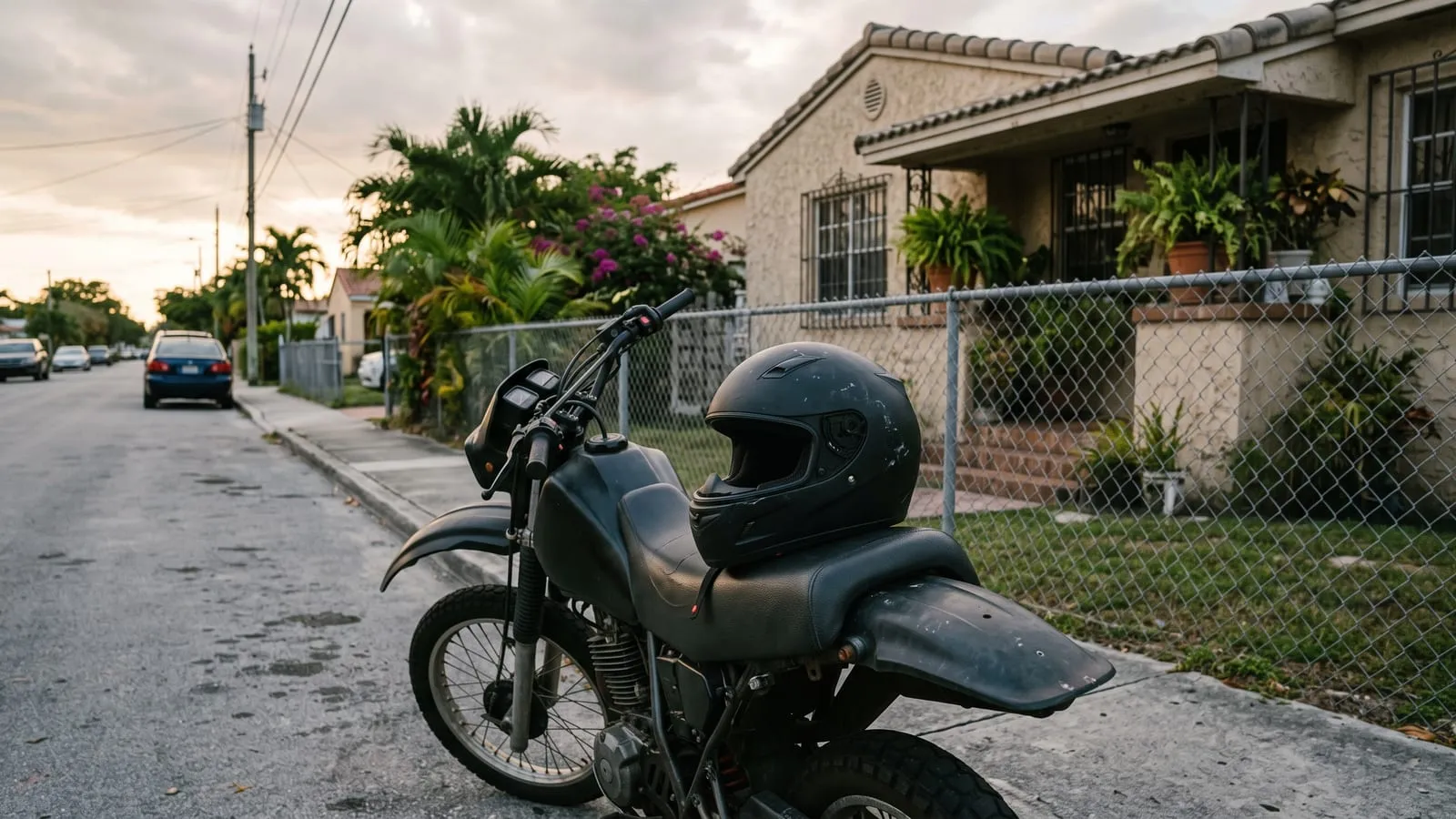
Riders in Hialeah ask this on the first call more than any other question, usually with a tone that suggests they already assume the answer is no. It is not. Here is what Florida law actually says, and what the insurance company will do with it.
What Florida’s helmet law says
Fla. Stat. § 316.211 requires every rider to wear eye protection. It requires a helmet for riders under 21. For riders 21 and older, a helmet is optional if the rider is covered by an insurance policy providing at least $10,000 in medical benefits for injuries from a motorcycle crash. That coverage can be a health insurance policy, a motorcycle policy with medical payments coverage, or similar.
If you were 21 or older with that coverage, riding without a helmet was lawful. Doing something lawful is not negligence, and it does not bar a claim.
What the insurer will argue anyway
The insurer’s argument is not “you broke the law.” It is “your head injury would have been less severe with a helmet, so a jury should assign you part of the fault for that injury.” Under Florida’s comparative fault statute (Fla. Stat. § 768.81), a jury can reduce your damages by whatever percentage of fault it assigns to you. Florida courts have allowed the helmet argument to go to the jury in some cases as evidence relevant to damages for head injuries, though the defense has to actually prove, usually through an expert, that a helmet would have made a difference.
Three things limit that argument in practice:
- It only reaches head and face injuries. A helmet has nothing to do with a broken leg, a shattered wrist, road rash, or a torn rotator cuff. Most motorcycle injuries are below the neck.
- It reduces, it does not bar, unless the jury finds you more than 50% at fault for the crash overall (Fla. Stat. § 768.81(6)). A driver who turned left in front of you is going to carry most of the fault regardless of what was on your head.
- It has to be proven. “He wasn’t wearing a helmet” is not evidence that the injury would have been prevented. The defense needs a biomechanical or medical expert, and their opinion can be challenged.
Why motorcycle claims are different from car claims in Florida
Motorcycles are not “motor vehicles” under Florida’s no-fault statute (Fla. Stat. § 627.732(3)), so there is no PIP for riders. That cuts both ways. There is no $10,000 cushion for medical bills, which is why health insurance or medical payments coverage matters, and why the $10,000 medical benefits requirement in the helmet law exists. But there is also no permanent-injury threshold: a rider can claim pain and suffering against the at-fault driver for any injury, not only a permanent one (Fla. Stat. § 627.737 applies to no-fault claims, and motorcycles are outside it).
The crash that fills our motorcycle files in Hialeah
A car turns left across the rider’s path at an intersection on W 49th St, Okeechobee Road, W 68th St, or the Palmetto frontage roads. The driver says they never saw the motorcycle. Fla. Stat. § 316.122 requires a driver turning left to yield to oncoming vehicles close enough to be an immediate hazard, and “I didn’t see him” is a description of the failure to look, not a defense. Intersection cameras, business cameras, witnesses, and the physical evidence show the rider had the right of way. Whether the rider wore a helmet has nothing to do with who caused the crash.
What to do after a motorcycle crash, helmet or not
Get medical care immediately. Keep the bike, your gear, and your helmet if you had one, exactly as they are. Photograph the scene, the car, and its plate. Get witness names; in a motorcycle case the driver’s story and yours will differ, and a neutral witness decides it. Do not talk to the driver’s insurer before talking to a lawyer, and do not answer “were you wearing a helmet?” on a recorded line. Then check every policy in your household for uninsured motorist coverage, because the driver who turned in front of you may well have no bodily injury coverage at all.
Call (305) 285-7071. Free consultation, English or Spanish, no fee unless we recover money for you.
Key facts
- Riders 21 and older may ride without a helmet if covered by an insurance policy providing at least $10,000 in medical benefits; eye protection is required for all riders. Source: Fla. Stat. § 316.211(3)(b), (2)
- Florida uses modified comparative negligence: recovery is reduced by the plaintiff's share of fault and barred above 50%. Source: Fla. Stat. § 768.81(6)
- Motorcycles are excluded from Florida's no-fault (PIP) system; there is no PIP for riders and no permanent-injury threshold for pain and suffering. Source: Fla. Stat. § 627.732(3), § 627.737
- A driver turning left must yield to oncoming traffic close enough to be an immediate hazard. Source: Fla. Stat. § 316.122
Frequently asked questions
I was under 21 and had no helmet. What then?
Riding without a helmet under 21 is a violation of Fla. Stat. § 316.211, and the insurer will use it more aggressively. It still does not bar the claim; it is comparative fault evidence, and it only matters for head and face injuries.
My injuries are to my leg and shoulder. Does the helmet matter at all?
No. A helmet has nothing to do with a fractured leg or a torn rotator cuff. The insurer may still bring it up to color the jury's view of you; a good lawyer keeps it out or explains why it is irrelevant.
The driver who turned in front of me had no bodily injury insurance. Now what?
Check every policy in your household for uninsured motorist (UM) coverage: your motorcycle policy, your car policy, and relatives you live with. UM stands in for the uninsured driver. Because there is no PIP for motorcycles, UM is often the only meaningful source of recovery.
How do I prove the driver 'didn't see me' is not a defense?
With Fla. Stat. § 316.122, which requires a left-turning driver to yield to oncoming traffic, and with the evidence: intersection cameras, witness statements, the crash report, and the physical damage. Not seeing a motorcycle that was there is a failure to look, which is negligence.
This article is general information about Florida law, not legal advice, and reading it does not create an attorney-client relationship with Wolfson & Leon. Every case is different and prior results do not guarantee a similar outcome. If you were hurt, talk to a lawyer about your own situation.
 Motorcycle accidents
 I Need a Motorcycle Accident Attorney in Hialeah: How Do I Start?
The path from 'I need a lawyer' to 'my lawyer is handling it' has five concrete steps: get medical care, gather what you already have, make one…
 Motorcycle accidents
 Motorcycle Accident in Florida With No Insurance: What Happens Next
Yes, you can still file a claim against the driver who caused the crash even if you were riding uninsured, Florida's fault-based system for…