
Do I Need a Lawyer for an Uber Accident Claim, or Can I Handle It Myself?
You can handle an Uber accident claim yourself when your injuries are minor, your medical bills stay within your PIP benefits (up to $10,000, or $2,500 without an emergency medical condition), and nobody disputes the driver's app status. Once bills exceed PIP, the driver's app status is contested, or your injuries are permanent, the claim involves multiple overlapping policies and legal thresholds that can be hard to navigate without a lawyer.
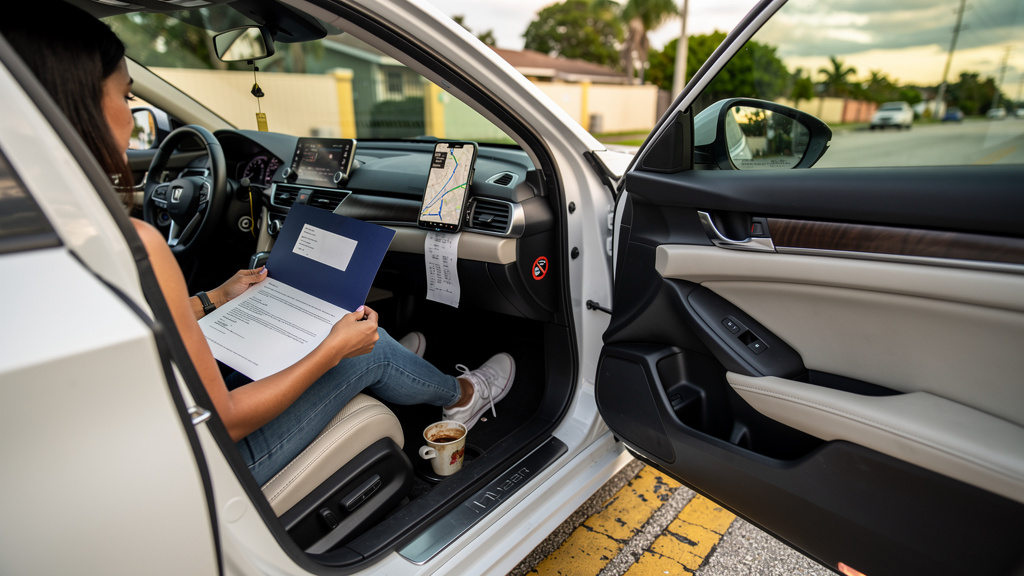
You can handle an Uber accident claim yourself only in a narrow set of circumstances: minor injuries, medical bills that stay within your PIP benefits (up to $10,000, or $2,500 without an emergency medical condition), no dispute about who caused the crash, and clear proof the Uber driver had the app active during your trip. If those conditions are met, your claim may resolve through your own personal injury protection (PIP) coverage without needing to touch Uber’s liability insurance or involve an attorney. But once your bills exceed PIP limits, your injury appears permanent, or there is any question about the driver’s app status, the claim quickly involves multiple overlapping insurance policies and legal thresholds that can be hard for unrepresented claimants to navigate.
When can I realistically handle this claim on my own?
You might manage without a lawyer if you were in a low-speed rear-end crash while riding Uber, saw a doctor within 14 days, got treated once or twice, and all your medical bills fall within your PIP benefits (up to $10,000, or $2,500 without an emergency medical condition). The trip must have been clearly active, meaning the driver accepted your ride and you were either en route or still in the car, and no one disputes fault. In that narrow scenario, your own auto insurer pays 80% of your reasonable medical bills (and 60% of lost income) under PIP, regardless of who caused the crash. Florida law requires you to seek treatment within 14 days of the crash or lose PIP entirely [Fla. Stat. § 627.736]. Many people miss this deadline and get nothing, even though they paid for coverage. Also remember: your PIP comes first, then a household relative’s PIP, and only then would another vehicle’s PIP apply, which matters if you were walking or biking, not riding [Fla. Stat. § 627.736(4)(e)]. If you are asking, “Could I get away settling on my own and avoid using a lawyer?” the answer is yes, but only if every condition lines up cleanly. Do not assume Florida’s “no-fault” system means you never deal with other insurers; it only applies while your claim stays inside PIP.
When does handling it yourself usually fall apart?
Most self-represented claims break down in three predictable ways. First, when medical bills exceed what PIP pays, you must turn to other coverage. During an active Uber trip, the rideshare company provides at least $1 million in liability insurance [Fla. Stat. § 627.748(7)]. But if a third driver caused the crash and has no bodily injury coverage, and many Miami-Dade drivers carry none, since Florida does not require it, your recourse may be the rideshare company’s uninsured motorist (UM) coverage that applies during the trip, or your own UM policy, if you have one and did not reject it in writing [Fla. Stat. § 627.727].
Second, insurers routinely dispute whether the driver was actually logged into the app. Coverage depends on timing: app off means no rideshare coverage; app on but no ride accepted yet (Period 1) requires at least $50,000/$100,000/$25,000 in liability coverage plus PIP; Periods 2, 3 (ride accepted or passenger aboard) activate the full $1 million. Uber holds the timestamped data, so it should be requested and preserved early. A personal auto policy can legally exclude rideshare activity altogether [Fla. Stat. § 627.748].
Third, you may hear, “Whose insurance am I supposed to deal with?” or “Neither the at-fault driver nor Uber will pay.” That silence often happens while insurers sort out who pays first. But Florida’s rideshare law says coverage under the TNC’s policy may not depend on the driver’s personal insurer first denying the claim [Fla. Stat. § 627.748]. Without knowing that rule, you get bounced between companies indefinitely.
What does it take to recover pain and suffering in Florida?
In Florida, you cannot automatically claim pain and suffering just because you were hurt in a crash. To recover those damages from the at-fault driver, you must prove a permanent injury, a permanent loss of an important bodily function, or significant and permanent scarring or disfigurement [Fla. Stat. § 627.737(2)]. Soft-tissue injuries like whiplash that fully heal usually do not meet this threshold. Injuries with lasting effects, such as some fractures, disc herniations with lasting impairment, or traumatic brain injuries, may meet it, depending on the medical evidence. If your injury crosses this line, the potential value of your claim increases enough that insurers will aggressively challenge it, making professional help almost always worthwhile. If your injury does not meet the threshold, pain and suffering is simply not available, no matter who represents you. Do not let the adjuster imply otherwise.
How does blame-splitting affect what I say at the scene and to adjusters?
Florida uses modified comparative negligence: your recovery is reduced by your share of fault and barred only if you are found more than 50 percent at fault [Fla. Stat. § 768.81(6)]. Even a 25 percent fault finding on a $100,000 claim costs you $25,000. Statements you make right after the crash, at the scene, in the Uber app, or to an insurance adjuster, become permanent evidence used to assign that percentage. Adjusters often call within days, record your call, and use your words against you later by suggesting your injuries were minor, pre-existing, or unrelated. In multi-car crashes, such as those on busy roads like the Palmetto Expressway, fault is often not clear-cut. You are not required to give a recorded statement to anyone except your own insurer. If you are thinking, “I should get a lawyer involved, but when?” the answer is: before you say anything on the record.
What does a lawyer actually do that I cannot do myself, side by side?
| What you do alone | What an attorney does |
|---|---|
| File a PIP claim with your own insurer | Send a litigation hold letter to Uber within days to preserve critical trip data (app logs, GPS, timestamps) |
| Contact Uber’s online claims portal and wait | Request the official crash report under [Fla. Stat. § 316.066], which is confidential for 60 days except to parties, insurers, and lawyers |
| Accept or counter a settlement offer based on what the adjuster tells you | Identify all applicable coverage layers: your PIP, the correct rideshare period (1, 2, or 3), third-party bodily injury (if any), and your household UM coverage [Fla. Stat. § 627.727] |
| Sign a release without knowing what other policies exist | Use the rule that rideshare coverage may not depend on a prior denial from the driver’s personal policy [Fla. Stat. § 627.748] to press the rideshare insurer to respond |
| Assume your soft-tissue injury qualifies for pain and suffering | Document whether your injury meets the permanent injury threshold under [Fla. Stat. § 627.737(2)] |
| Give a recorded statement without understanding fault exposure | Calculate potential fault percentages under [Fla. Stat. § 768.81(6)] before any statement is given |
What does it cost to find out if you have a case?
Nothing. Wolfson & Leon offers free consultations for Uber accident claims in Hialeah and Miami-Dade. Personal injury cases are handled on contingency, you pay no fee unless compensation is recovered. If you are wondering, “Could I get away settling on my own?” the smart first step is to find out what coverage actually applies. In a free consultation, we can tell you which rideshare coverage period likely applies, whether your injury meets Florida’s serious injury threshold, whether you still have UM coverage (many don’t realize they kept it), and how close you are to the two-year lawsuit deadline for accidents on or after March 24, 2023 [Fla. Stat. § 95.11]. We know that many local drivers carry no bodily injury insurance, so we focus on the policies that actually pay: Uber’s commercial coverage and your own UM.
Frequently asked questions
Was in an accident in an Uber and never heard from the insurance adjuster, is that normal?
Yes. Insurers may delay contact while they investigate coverage tiers. Silence does not mean your claim is invalid; it may mean the insurers are still sorting out who pays first.
If my Uber driver was hit by someone else, whose insurance pays me?
Your own PIP pays first: 80% of reasonable medical bills and 60% of lost wages, up to $10,000 (or $2,500 without an emergency medical condition). For additional damages, you may pursue the at-fault driver’s bodily injury policy, if they have one. If not, you may turn to Uber’s uninsured motorist coverage (if the trip was active) or your own uninsured motorist coverage [Fla. Stat. § 627.727].
Can I recover pain and suffering if I was hurt in an Uber crash?
Only if you prove a permanent injury, permanent loss of an important bodily function, or significant and permanent scarring [Fla. Stat. § 627.737(2)]. Temporary injuries, even if painful, do not qualify under Florida law.
Does it matter what I say to the Uber app or the insurance adjuster right after the crash?
Yes. Anything you type in the Uber app or say in a recorded statement becomes evidence used to assess fault and injury severity. Adjusters use those statements to dispute claims months later. You are not required to give a recorded statement to the other driver’s or Uber’s insurer.
How long do I have to file a lawsuit after an Uber accident in Florida?
For accidents on or after March 24, 2023, you have two years from the date of the crash to file a negligence lawsuit [Fla. Stat. § 95.11]. Missing this deadline ends your right to sue, regardless of how severe your injuries are.
Related reading: I was in an Uber or Lyft accident in Hialeah. Whose insurance pays? · The driver who hit me in Hialeah has no insurance. What now? · Partly at Fault for a Hialeah Crash? Here Is What You Can Still Recover · The 14-day PIP rule in Florida: what happens if you wait to see a doctor after a Hialeah car accident
Hurt in an accident in Hialeah? Call Wolfson & Leon at (305) 285-7071 for a free consultation. We speak Spanish, and there is no fee unless we win.
Key facts
- Florida PIP pays 80 percent of reasonable medical bills and 60 percent of lost wages up to $10,000 (or $2,500 if no emergency medical condition is found), but only if you see a doctor within 14 days of the crash. Source: Fla. Stat. § 627.736
- While a rideshare driver is engaged in a prearranged ride, meaning the driver accepted the trip through the moment the passenger is dropped off, Florida law requires at least $1 million in primary liability coverage from the rideshare company. Source: Fla. Stat. § 627.748(7)
- To recover pain and suffering damages from the at-fault driver, a Florida claimant must prove a permanent injury, permanent loss of an important bodily function, or significant and permanent scarring. Source: Fla. Stat. § 627.737(2)
- Florida uses modified comparative negligence: your recovery is reduced by your share of fault and barred entirely only if you are found more than 50 percent at fault. Source: Fla. Stat. § 768.81(6)
- Florida does not require drivers to carry bodily injury liability coverage, and many Miami-Dade drivers carry none. Uninsured motorist coverage is optional and must be rejected in writing to waive it. Source: Fla. Stat. § 627.727
Frequently asked questions
Was in an accident in an Uber and never heard from the insurance adjuster, is that normal?
It is common, especially when the driver's app status is disputed. Rideshare insurers often delay contact while they investigate whether the crash happened during Period 1 (app on, waiting) or Periods 2, 3 (trip accepted or passenger aboard), because those periods trigger very different coverage limits under Fla. Stat. § 627.748(7). While you wait, the 14-day window to start treatment for PIP under § 627.736 keeps running. Do not wait for the adjuster to call, see a doctor and speak with an attorney.
If my Uber driver was hit by someone else, whose insurance pays me?
Your own PIP policy pays first, 80 percent of reasonable medical bills and 60 percent of lost wages up to your policy limit, regardless of who caused the crash, as long as you were treated within 14 days (§ 627.736). After PIP, the at-fault third driver's bodily injury liability policy is the next source. If that driver carried no bodily injury coverage, which is legal in Florida and common in Miami-Dade, your own uninsured motorist coverage (§ 627.727) or the rideshare company's UM policy may be the only remaining option. This layering is exactly why identifying every applicable policy early matters.
Can I recover pain and suffering if I was hurt in an Uber crash?
Only if your injury meets the serious injury threshold under Fla. Stat. § 627.737(2): a permanent injury, permanent loss of an important bodily function, or significant and permanent scarring. Injuries that fully resolve, even painful ones, typically do not qualify. If your injury does meet the threshold, the available damages are significant, and insurers will contest them aggressively, which is the point at which self-representation most often costs claimants money.
Does it matter what I say to the Uber app or the insurance adjuster right after the crash?
Yes, significantly. Under Fla. Stat. § 768.81(6), your recovery is reduced by whatever percentage of fault is assigned to you, and eliminated entirely if you are found more than 50 percent at fault. Recorded statements to adjusters and narratives entered through the Uber app become permanent evidence used to establish that percentage. You are not required to give a recorded statement to any insurer other than your own. Speak with an attorney before giving any statement about how the crash happened or how you feel.
How long do I have to file a lawsuit after an Uber accident in Florida?
For crashes on or after March 24, 2023, you have two years from the date of the crash to file a negligence lawsuit under Fla. Stat. § 95.11. Missing that deadline eliminates the right to sue, regardless of how strong the claim is. Because rideshare cases require early preservation of app data, trip records, and medical documentation, waiting until near the deadline creates serious practical problems even if the legal deadline is technically met.
This article is general information about Florida law, not legal advice, and reading it does not create an attorney-client relationship. Every case is different and past results do not guarantee a similar outcome. For advice about your situation, call Wolfson & Leon at (305) 285-7071 for a free consultation.
Also available in: Versión en español
 Uber and Lyft accidents
 What to Bring to Your Uber Accident Lawyer Consultation in Hialeah
Bring your in-app trip receipt and screenshots, the crash report number from the agency that worked the scene, your auto insurance declarations…
 Uber and Lyft accidents
 Injured in an Uber Accident in Hialeah? Here Is How to Hire a Lawyer
Call a personal injury lawyer who handles Uber and Lyft claims before you speak to any insurance adjuster, the driver's app status at the moment of…
 Uber and Lyft accidents
 Uber Driver Had the App Off When They Hit You: Who Pays in Florida?
When an Uber driver's app is completely off at the moment of a crash, Uber's insurance policy does not apply at all, the driver is treated like any…