
What Is the Average Payout for a Slip-and-Fall Case in Miami?
There is no reliable average payout for a Miami slip-and-fall case, and any dollar range you find online tells you almost nothing about your own situation. What actually determines the value of a case is a specific set of factors: the seriousness of the injury and the treatment it required, whether there is proof the property owner knew about the hazard, how much fault is assigned to you, your lost income, and how much insurance is available to pay a claim. Understanding those factors is the only honest way to assess what a case is worth.
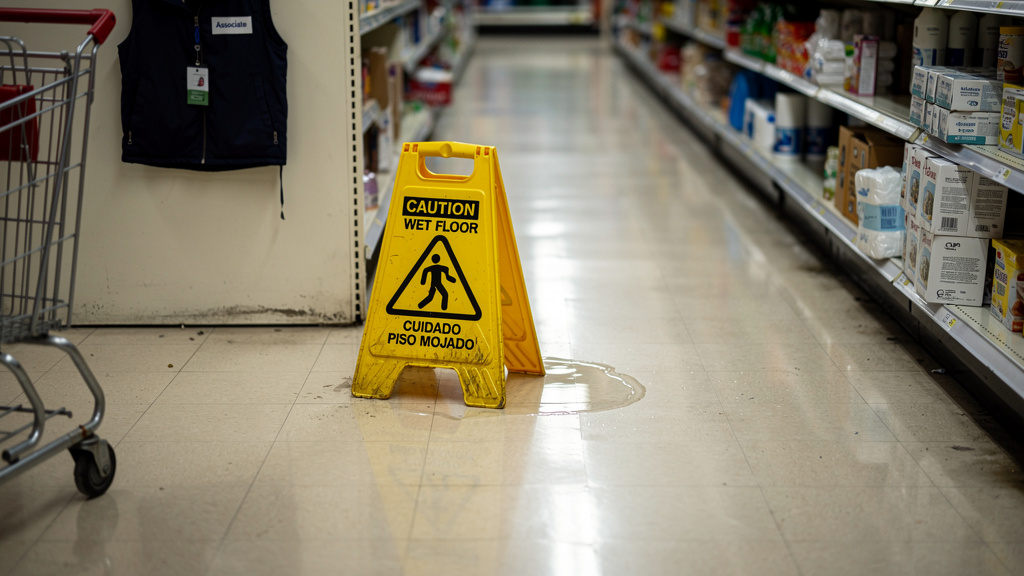
There is no reliable average payout for a Miami slip-and-fall case, and any dollar range you find online tells you almost nothing about your own situation. What actually determines the value of a case is a specific set of factors: the seriousness of the injury and the treatment it required, whether there is proof the property owner knew about the hazard, how much fault is assigned to you, your lost income, and how much insurance is available to pay a claim. Understanding those factors is the only honest way to assess what a case is worth.
Why can’t anyone give me a reliable average number?
Published “average” settlement figures for slip-and-fall cases are misleading because they lump together injuries that have nothing in common. A soft-tissue strain that heals in eight weeks and a herniated disc requiring spinal fusion should never be averaged, they represent entirely different levels of harm, medical expense, and life disruption. Cases filed in Miami-Dade are heard in the Eleventh Judicial Circuit Court, where jury tendencies and court schedules can influence negotiations even if a case settles early. But none of that changes the core truth: the value of your claim depends on your specific facts, not a broad statistic pulled from unrelated cases across the state or country.
How much does the injury itself, and the treatment it required, affect the value?
The severity of your injury and the medical care it demanded is the single biggest factor in determining case value. A fall at a supermarket on W 49th Street that causes a minor sprain will involve far less compensation than one that fractures your hip in a shopping-plaza parking lot or causes a traumatic brain injury after hitting your head on a poorly maintained stairwell in a Hialeah apartment building. Surgery matters, not just medically, but legally, because it creates objective evidence of serious harm that insurers and juries recognize. Under Florida’s 2023 tort reform law (Fla. Stat. § 768.0427(4)), past medical expenses you can recover are generally limited to amounts actually paid or still owed, not the higher amounts initially billed by providers. This means documentation of real costs, not sticker prices, drives this part of your claim.
What does ‘the owner knew or should have known’ actually mean for my case?
For a spill or other transitory substance in a business, like a puddle in an aisle, Florida law (Fla. Stat. § 768.0755) requires you to prove the business either actually knew about the dangerous condition or should have known because it existed long enough that a reasonable inspection would have found it. Falls caused by other hazards, like broken pavement or a loose railing, are generally decided under broader premises liability rules that also look at what the owner knew or should have known. It could also apply if the hazard happened so often, like recurring leaks near a store entrance, that the owner should have anticipated it. Without meeting this standard, your case may fail no matter how badly you were hurt. Evidence like security footage from a Hialeah retail store, maintenance logs from an apartment complex, or witness statements about how long a cracked pavement section had been unrepaired can make or break this element. That evidence can disappear fast, so acting quickly to preserve it is essential.
Can my own share of fault reduce or wipe out what I can recover?
Yes. Under Florida’s modified comparative negligence rule (Fla. Stat. § 768.81(6), amended in 2023), your recovery is reduced by your percentage of fault, but only if you are 50 percent or less to blame. If a jury finds you MORE THAN 50 percent at fault, you get nothing. For example, if you’re found 30 percent responsible for not seeing a wet floor sign, your damages are cut by 30 percent. This makes it critical to gather evidence that shows the property owner’s responsibility outweighs any misstep you may have made. You must prove the owner’s negligence, and the owner must prove any share of fault it says is yours.
What role do lost income and future care play in the value of a claim?
Your claim includes not just past medical bills but also past and future lost wages and the cost of ongoing care. If your injury keeps you off work for months, or prevents you from ever returning to your job as a delivery driver, construction worker, or restaurant employee, the value increases significantly. Future earnings must be calculated in present value under Fla. Stat. § 768.81(1)(b), meaning projected losses are adjusted to today’s dollars. Future medical needs, like physical therapy, additional surgeries, or mobility aids, must be supported by medical expert testimony. Pay stubs, employer letters, and detailed treatment plans form the backbone of these parts of your claim, especially for hourly or self-employed workers who lack traditional payroll records.
What can I actually claim, and does the car-accident permanent-injury rule apply to falls?
In a Florida slip-and-fall case, you can pursue past and future medical expenses, lost wages, and pain and suffering. Importantly, the permanent-injury threshold that limits pain-and-suffering claims in auto accidents (Fla. Stat. § 627.737) does NOT apply to premises liability cases like yours. You do not need a permanent injury to seek compensation for pain and emotional distress from a fall. However, what you can actually collect often depends on the property owner’s insurance policy limits. Larger businesses or apartment complexes may carry more coverage than small storefronts, which can affect realistic settlement potential. We review every slip-and-fall case free of charge, and you pay no attorney fee unless we secure a recovery for you.
Frequently asked questions
How do I prove the business knew about the hazard that caused my fall?
You can show actual knowledge through employee statements or incident reports. Constructive knowledge can be proven with surveillance video showing how long the hazard existed, maintenance records, or witness testimony about recurring issues like frequent spills or broken pavement.
Can I still get compensation if I was partly at fault for my fall?
Yes, as long as you are found 50 percent or less at fault. Your recovery will be reduced by your percentage of fault. If you are found more than 50 percent responsible, you cannot recover anything under Florida law.
Does the permanent-injury rule from car-accident cases apply to slip-and-fall claims?
No. The permanent injury requirement in Fla. Stat. § 627.737 applies only to motor vehicle accidents. Slip-and-fall victims can seek pain and suffering damages regardless of whether their injury is deemed permanent.
How long do I have to file a slip-and-fall lawsuit in Miami?
For falls that occurred on or after March 24, 2023, you have two years from the date of the incident to file a lawsuit under Fla. Stat. § 95.11. Earlier cases had a four-year window.
Does the property owner’s insurance limit affect how much I can actually recover?
Often, yes. The available insurance coverage can set a practical ceiling on what can be collected, even if your damages exceed that amount. Policy limits vary by business size and property type.
Related reading: I fell in a store in Hialeah. Can I make a claim? · The 14-day PIP rule in Florida: what happens if you wait to see a doctor after a Hialeah car accident · How long do I have to file an injury lawsuit in Florida? The two-year rule after HB 837 · The driver who hit me in Hialeah has no insurance. What now?
Hurt in an accident in Hialeah? Call Wolfson & Leon at (305) 285-7071 for a free consultation. We speak Spanish, and there is no fee unless we win.
Key facts
- When a person slips on a transitory foreign substance in a business, Florida law requires proof that the business had actual or constructive knowledge of the dangerous condition and should have taken action to remedy it. Source: Fla. Stat. § 768.0755
- If a Miami-Dade jury finds a plaintiff more than 50 percent at fault, that plaintiff is completely barred from recovering any damages. Source: Fla. Stat. § 768.81(6)
- Slip-and-fall claims are not subject to the permanent-injury threshold that limits pain-and-suffering recovery in motor-vehicle cases; that threshold applies only to automobile accidents. Source: Fla. Stat. § 627.737
- Injured Floridians generally have two years from the date of a slip-and-fall to file a personal injury lawsuit in circuit court; cases arising before March 24, 2023 had four years. Source: Fla. Stat. § 95.11
- Cases filed in Miami-Dade are heard in the Eleventh Judicial Circuit Court, and the county's docket timelines and jury composition can affect settlement leverage even when a case never reaches trial. Source: Caseworth (2026-03-06)
Frequently asked questions
How do I prove the business knew about the hazard that caused my fall?
Florida law requires you to show the property owner had actual knowledge of the dangerous condition or that it existed long enough that a reasonable inspection should have found it, or that similar conditions recurred regularly enough that the owner should have anticipated the risk. Evidence used to establish this includes surveillance video showing how long a spill sat on the floor, maintenance and inspection logs, prior incident reports for the same hazard, and witness testimony. Under Fla. Stat. § 768.0755, without satisfying this standard your claim may not succeed regardless of how serious your injury is. Acting quickly to preserve evidence, before footage is overwritten or logs disappear, is critical.
Can I still get compensation if I was partly at fault for my fall?
Yes, in most situations. Florida's modified comparative negligence rule under Fla. Stat. § 768.81 reduces your recovery by your assigned percentage of fault, but does not bar you from recovering unless you are found MORE THAN 50 percent responsible. For example, if a jury finds you 25 percent at fault, your damages are reduced by 25 percent and you still recover the remaining 75 percent. Only if your share of fault exceeds 50 percent are you completely barred from any recovery. Building strong evidence of the property owner's negligence is essential to keeping your assigned fault percentage low.
Does the permanent-injury rule from car-accident cases apply to slip-and-fall claims?
No. The permanent-injury threshold that limits pain-and-suffering recovery in motor-vehicle cases is specific to automobile accidents under Fla. Stat. § 627.737 and does not apply to slip-and-fall premises liability claims. In a slip-and-fall case, you can pursue compensation for pain and suffering without being required to prove that your injury is permanent. This is a meaningful difference for people who suffered serious but non-permanent injuries in a fall.
How long do I have to file a slip-and-fall lawsuit in Miami?
For injuries that occurred on or after March 24, 2023, Florida law gives you two years from the date of the fall to file a personal injury lawsuit. Missing that deadline will generally bar your claim entirely. Cases arising before March 24, 2023 were subject to a four-year window. Lawsuits involving Miami-Dade falls are filed in the Eleventh Judicial Circuit Court. Because evidence also disappears quickly, surveillance footage is often overwritten within days, contacting an attorney well before the deadline is strongly advisable.
Does the property owner's insurance limit affect how much I can actually recover?
Often, yes. The insurance policy held by the responsible property owner can set a practical ceiling on what can be collected, regardless of what a jury might award. Smaller businesses, including some stores and apartment buildings common in Hialeah, may carry lower limits than large national retail chains. When damages exceed available coverage, recovery from the property owner's personal or corporate assets may be possible but can be more complicated. An attorney can help identify all available policies, including any umbrella coverage, to determine the realistic recovery picture in a specific case.
This article is general information about Florida law, not legal advice, and reading it does not create an attorney-client relationship. Every case is different and past results do not guarantee a similar outcome. For advice about your situation, call Wolfson & Leon at (305) 285-7071 for a free consultation.
Also available in: Versión en español
 Slip and fall
 Slipped in a Florida Supermarket? You Can Sue If the Store Knew
Yes, you can sue a Florida supermarket if the store knew about the hazard or should have known about it and failed to clean it up or warn you.…
 Slip and fall
 Where to Find a Slip and Fall Lawyer Near You in Hialeah
Wolfson & Leon has a Hialeah office at 1840 W 49th St, Suite 734, where Spanish- and English-speaking attorneys offer free consultations with no fee…
 Slip and fall
 I Fell at Work in Hialeah: Do I Need a Workers' Comp or Personal Injury Lawyer?
Workers' comp almost always covers a fall at work in Florida, and it is usually your only claim against your own employer. But if someone other than…