
When Is the Hospital Itself Responsible for Your Negligent Care in Florida?
Yes, the hospital itself can be the defendant when the harm traces back to institutional failures rather than one doctor's mistake. Florida law recognizes that hospitals owe patients a direct duty of care for how they staff wards, train and credential providers, manage medications, control infections, and decide when a patient is safe to leave. If that institutional system broke down, the hospital bears its own liability, separate from whatever the treating physician did or did not do.
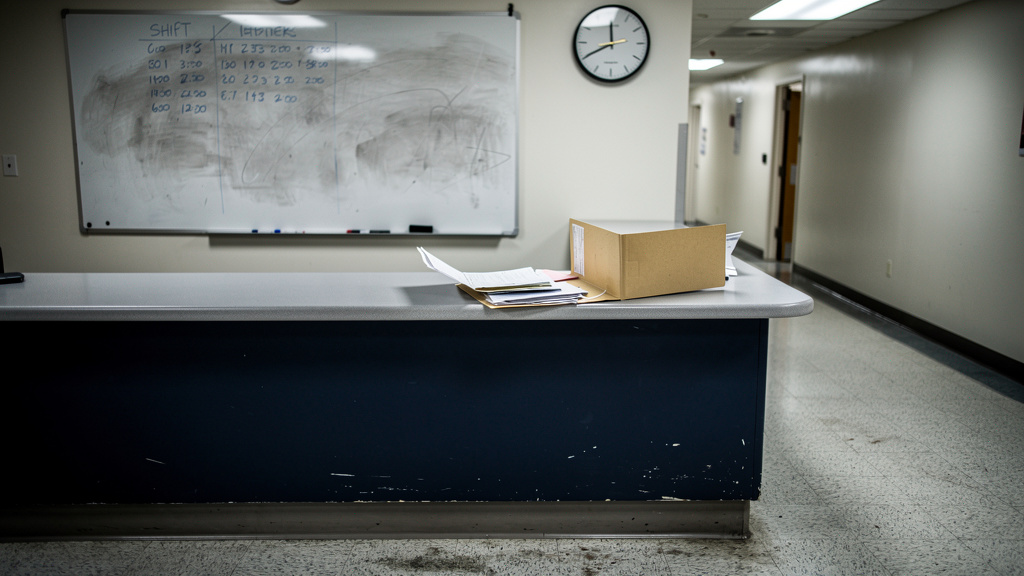
Yes, the hospital itself can be the defendant when the harm traces back to institutional failures rather than one doctor’s mistake. Florida law recognizes that hospitals owe patients a direct duty of care for how they staff wards, train and credential providers, manage medications, control infections, and decide when a patient is safe to leave. If that institutional system broke down, the hospital bears its own liability, separate from whatever the treating physician did or did not do.
Which hospital workers can make the hospital liable, and which ones can’t?
The hospital is directly responsible for employees it hires and supervises. Nurses, nursing aides, patient-care technicians, pharmacists, and hospital-employed hospitalists are hospital staff, their on-the-job negligence makes the institution liable under vicarious liability principles. This is different from independent-contractor physicians, whose employment status requires a separate analysis. Hialeah Hospital and Palmetto General are generally understood to be privately operated facilities. They are subject to standard Florida civil liability rules, including the medical malpractice standard in Fla. Stat. § 766.102, which asks whether the care fell below what a reasonably prudent similar facility would have provided. Public facilities, which may include those within Jackson Health System, may trigger different rules under Florida’s sovereign immunity statute, so anyone treated there should get legal advice specific to that setting. A staffing agency that placed a negligent nurse may also share liability alongside the hospital.
What if a nurse gave the wrong drug or no one monitored my condition?
Medication errors and monitoring breakdowns are often signs of systemic failure, not just individual error. The hospital can be liable when the wrong drug was ordered or dispensed, a dose was miscalculated, allergy flags were ignored, or medications were not reconciled on admission. Bedside staff failing to catch a deteriorating patient, through missed vital signs, delayed response to alarms, or poor charting, may reflect understaffing, inadequate training, or weak safety protocols. Under Florida law, the standard is what a reasonably prudent similar facility would have done [Fla. Stat. § 766.102(1)]. Evidence of institutional shortcomings might include pharmacy procedures, nursing supervisor oversight, or night-shift staffing levels. Proving this requires expert testimony, as required by statute. Examples of system-level breakdowns can include MRSA outbreaks, C. diff infections, and central-line infections tied to policy lapses.
Can the hospital be liable if I got an infection or developed pressure sores?
Hospital-acquired infections, such as MRSA, C. difficile, central-line bloodstream infections, catheter-associated UTIs, and surgical-site infections, along with pressure ulcers from lack of repositioning, can form the basis of a hospital negligence claim. Proving these claims can be particularly difficult because the hospital will argue the condition was pre-existing or unavoidable. The key is showing the infection or wound resulted from the hospital’s failure to meet the standard of care: what a reasonably prudent similar facility would have done to prevent it [Fla. Stat. § 766.102(1)]. Relevant evidence includes infection-control logs, hand-hygiene audits, turn-and-reposition documentation, sterilization records, and staffing rosters. Understaffing often contributes to these outcomes, especially on night shifts. The presence of such records does not guarantee success, but their absence can signal institutional neglect.
What if I was discharged too soon and my condition got worse at home?
Discharging a patient before clinical stability is confirmed can be institutional negligence. Failures include sending someone home without arranging follow-up care, providing discharge instructions in a language the patient does not understand, or ignoring test results that return after the patient leaves. In Hialeah, where many residents speak Spanish as their primary language, ensuring those instructions are clear and understandable can be part of the hospital’s duty of care. The hospital’s discharge planners and case managers are usually hospital employees, so their mistakes generally go directly to the institution. If you were sent home and then suffered a foreseeable complication that proper discharge planning would have prevented, the hospital may be liable under [Fla. Stat. § 766.102(1)], regardless of the discharging physician’s role.
Can the hospital be liable for not having enough staff or for credentialing a dangerous provider?
Yes, under Florida’s corporate negligence doctrine. First, staffing and policies: a hospital that knowingly understaffs a unit, assigns unqualified personnel, or ignores its own safety rules can be directly liable for resulting harm. Second, credentialing: if a hospital grants privileges to a provider it knew or should have known was incompetent, due to past malpractice, disciplinary action, or revoked privileges elsewhere, that is corporate negligence. This is a separate claim from any claim against the individual provider. The standard remains what a reasonably prudent similar facility would have done [Fla. Stat. § 766.102]. While [Fla. Stat. § 395.0191] sets credentialing requirements, proving a breach requires digging into internal hospital records. Hospitals have a legal duty here, though the specifics of any facility’s compliance require investigation.
What if the doctor who hurt me was not a hospital employee, does that end my claim against the hospital?
Not necessarily. Three legal theories may keep the hospital accountable. First, apparent agency: if the hospital presented the doctor as part of its team, through ER assignment, shared scheduling, or branded forms, and you reasonably believed the doctor was employed by the hospital, liability may attach [Roessler v. Novak]. This issue often comes up in emergency rooms, including at hospitals like Hialeah Hospital and Palmetto General, where patients may arrive by ambulance with no choice of provider. Second, corporate negligence: the hospital’s own failure to vet the doctor during credentialing is a direct claim. Third, non-delegable duties: certain legal obligations cannot be outsourced. A consent form saying “this doctor is independent” does not automatically block your claim, courts look at the full context. All three depend on facts that must be investigated early.
What does a Florida hospital negligence claim actually have to prove, and are public hospitals different?
To sue any Florida hospital, you must show: (1) the standard of care a reasonably prudent similar facility would have met under the same conditions, (2) the hospital deviated from that standard, (3) the deviation more likely than not caused your injury [Gooding v. University Hospital Building], and (4) you suffered damages. Expert testimony is required to establish the first two elements. You must also serve a Notice of Intent and wait 90 days for pre-suit investigation [Fla. Stat. § 766.106]. You generally have two years from the incident, or from when it was or should have been discovered, to file suit, with an outer limit that is generally four years [Fla. Stat. § 95.11]. Public hospitals, which may include those in Jackson Health System, fall under [Fla. Stat. § 768.28], which waives sovereign immunity but imposes procedural requirements, including written notice. Because those rules differ materially from private hospital cases, anyone injured at a public facility should consult an attorney immediately.
Frequently asked questions
Is there a deadline to sue a hospital in Florida for negligence?
Yes. You generally have two years from the date of the incident, or from when it was or should have been discovered, to file a lawsuit under [Fla. Stat. § 95.11], with an outer limit that is generally four years. You must also complete a mandatory 90-day pre-suit investigation period before filing.
Can the hospital be sued even if the doctor, not a nurse or hospital employee, made the mistake?
Yes. Even if the doctor is an independent contractor, the hospital may still be liable through apparent agency, corporate negligence in credentialing, or non-delegable statutory duties. The emergency room context often supports apparent agency claims.
What makes a hospital-acquired infection a legal claim rather than just bad luck?
It becomes a claim when you can show the infection resulted from the hospital’s failure to follow reasonable infection-control practices, such as poor hand hygiene, improper sterilization, or inadequate staffing, compared to what a similar facility would have done.
Are there different rules if I was hurt at Jackson Health System rather than at Hialeah Hospital or Palmetto General?
Yes. Jackson Health System is generally understood to be a public system, which would bring it under Florida’s sovereign immunity waiver [Fla. Stat. § 768.28] and its added notice requirements. Private hospitals generally do not have those requirements, so confirm a hospital’s status with an attorney.
If I was sent home from the hospital too soon and got worse, can the hospital be responsible?
Yes. If the hospital discharged you before you were stable, failed to give proper follow-up instructions, or ignored pending test results, that may constitute institutional negligence. The adequacy of discharge planning is a direct hospital duty.
Hurt in an accident in Hialeah? Call Wolfson & Leon at 305-965-3766 for a free consultation. We speak Spanish, and there is no fee unless we win.
Key facts
- Florida's medical malpractice standard requires proof that the hospital's conduct fell below the level of care a reasonably prudent similar facility would have provided under the same circumstances. Source: Fla. Stat. § 766.102(1)
- Lawsuits against public hospitals that are part of a government system, such as those operated under Jackson Health System, must comply with Florida's sovereign immunity waiver, which imposes additional procedural requirements, including written notice, before suit. Source: Fla. Stat. § 768.28
- Florida hospitals have a direct duty to assure the competence of their medical staff and personnel through careful selection and review, and a hospital can be liable for failing to use due care in that duty, separate from any claim against the individual provider. Source: Fla. Stat. § 766.110; Insinga v. LaBella, 543 So. 2d 209 (Fla. 1989)
- A hospital can be liable for an independent-contractor doctor's negligence under apparent agency if the hospital held the doctor out as part of its care team and the patient reasonably relied on that representation. Source: Wolfson & Leon
- Before filing a Florida hospital negligence lawsuit, the claimant must serve a Notice of Intent and allow a 90-day pre-suit investigation period; skipping this step can defeat the claim. Source: Fla. Stat. § 766.106
Frequently asked questions
Is there a deadline to sue a hospital in Florida for negligence?
Florida generally gives you two years from the date of the incident or from when you knew or reasonably should have known of the injury and its connection to the hospital's care, with an outer limit that is generally four years. Before you can file in court, you must also serve a Notice of Intent on the hospital and allow a mandatory 90-day pre-suit investigation period; the statute of limitations is paused during that window, but acting early still matters. If the hospital is a public entity, additional written notice requirements under Fla. Stat. § 768.28 apply.
Can the hospital be sued even if the doctor, not a nurse or hospital employee, made the mistake?
Potentially yes, through three separate legal routes. Florida courts recognize apparent agency, meaning the hospital can be liable if it presented the doctor as part of its own care team and you reasonably relied on that. The hospital can also be liable under corporate negligence if it failed to properly vet that doctor before granting hospital privileges. Finally, certain duties imposed by statute or regulation cannot be delegated to contractors at all. Which route applies depends on the specific facts of how that doctor was hired, disclosed, and presented to you.
What makes a hospital-acquired infection a legal claim rather than just bad luck?
A hospital-acquired infection becomes a legal claim when it is linked to a specific breakdown in the hospital's institutional infection-control system, things like failures in hand hygiene protocols, improper sterilization of equipment, non-compliance with central-line insertion standards, or understaffing that prevented timely isolation of contagious patients. The burden is on the injured patient to prove through expert testimony that the hospital's practices fell below what a reasonably prudent similar facility would have done under Fla. Stat. § 766.102(1). Proving that link can be challenging, which is why preserving medical records and infection-control logs early is critical.
Are there different rules if I was hurt at Jackson Health System rather than at Hialeah Hospital or Palmetto General?
Possibly significant ones. Hialeah Hospital and Palmetto General are generally understood to be privately operated and follow the standard Florida civil liability rules for medical negligence. Jackson Health System is understood to operate as a public trust, which may bring it under Fla. Stat. § 768.28, Florida's sovereign immunity waiver for government entities. That statute requires written notice to the agency before you can file a lawsuit and has other special rules. Anyone injured at a facility they believe is publicly operated should consult an attorney immediately, because the procedural requirements are materially different from those at a private hospital.
If I was sent home from the hospital too soon and got worse, can the hospital be responsible?
Yes, if the discharge decision fell below the standard a reasonably prudent similar hospital would have applied. The claim focuses on the hospital's discharge-planning system, whether nursing staff, case managers, and attending providers adequately confirmed stability before release, arranged necessary follow-up, and provided instructions the patient could actually understand and follow. In a community like Hialeah where many patients are Spanish-speaking, failure to provide language-appropriate discharge instructions can be a concrete institutional failure. The at-fault party is typically the hospital's institutional process, not just the individual physician who signed the discharge order.
This article is general information about Florida law, not legal advice, and reading it does not create an attorney-client relationship. Every case is different and past results do not guarantee a similar outcome. For advice about your situation, call Wolfson & Leon at 305-965-3766 for a free consultation.
Also available in: Versión en español
 Medical malpractice
Can I Sue Jackson Memorial Hospital for Negligence in Miami-Dade?
Yes, you can sue Jackson Memorial Hospital for negligence, but the rules are significantly different from suing a private hospital. Because Jackson…
 Medical malpractice
What You Must Do Before Suing a Hospital for Negligence in Florida
Before you can file a lawsuit against a hospital in Florida, you must complete a mandatory presuit process under Chapter 766 of the Florida…
 Medical malpractice
My Lawyer Wants to Bring In Another Firm: Will It Cost Me More?
Bringing in a second firm, called co-counsel, is common in complex malpractice cases and almost never increases what you pay. Under Florida Bar…