
Can I Sue Jackson Memorial Hospital for Negligence in Miami-Dade?
Yes, you can sue Jackson Memorial Hospital for negligence, but the rules are significantly different from suing a private hospital. Because Jackson Memorial operates as part of a public health system, Florida's sovereign immunity law under Fla. Stat. § 768.28 applies, which caps how much you can recover and requires you to serve a formal written notice on the agency before you can file a lawsuit. Missing either of those requirements can permanently end an otherwise valid claim.
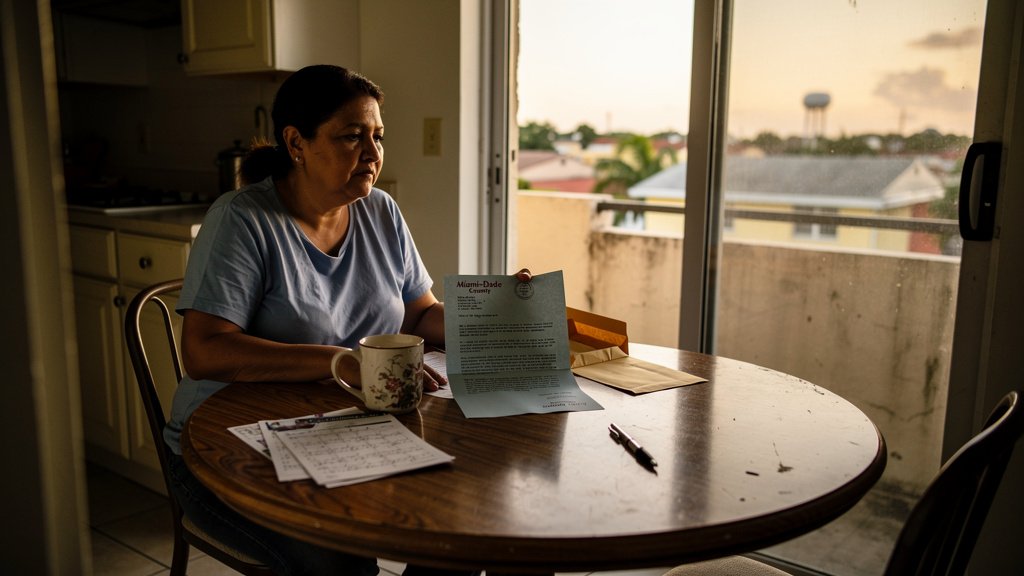
Yes, you can sue Jackson Memorial Hospital for negligence, but the rules are significantly different from suing a private hospital. Because Jackson Memorial operates as part of a public health system, Florida’s sovereign immunity law under Fla. Stat. § 768.28 applies, which caps how much you can recover and requires you to serve a formal written notice on the agency before you can file a lawsuit. Missing either of those requirements can permanently end an otherwise valid claim.
Why is Jackson Memorial Hospital treated differently from a private hospital?
Jackson Memorial Hospital is not a private corporation. It is generally understood to operate as part of Miami-Dade County’s public health system, which is governed by a public body (commonly identified as the Public Health Trust); an attorney should confirm the governing structure for your case. As the flagship hospital of that system, it serves residents across the county, including many from Hialeah. The system may include additional campuses beyond the main location downtown, though the exact list should be confirmed by an attorney during your intake.
Because it is generally treated as a government agency or instrumentality under Fla. Stat. § 768.28(2), lawsuits against it follow different rules than cases against private hospitals. Physicians affiliated with a university medical program may practice there, and their employment status matters greatly to the legal strategy. Was the doctor employed directly by the public entity, or by a private group that contracts with the hospital? That distinction affects who you can sue and whether damage caps apply. Only a careful review of the governing structure and staffing arrangements can determine the correct defendants.
What does sovereign immunity actually mean for my case?
Sovereign immunity means Florida generally blocks lawsuits against state agencies unless the legislature says otherwise. Under Fla. Stat. § 768.28(1), the state waives that immunity for injuries caused by government employees acting within the scope of their duties, but only up to a limit. The statute sets dollar limits per person and per incident on what the public entity can be ordered to pay; because those amounts are set by the Legislature and can change, an attorney should confirm the current figures at the time of your claim.
This limit can apply even if your injury is catastrophic, so a claim that might be worth far more against a private defendant may be limited in what can be collected from Jackson Memorial itself. That’s because, unlike private hospitals, public entities are shielded by sovereign immunity except to the extent the Legislature has waived it.
What is the written notice requirement, and when must I serve it?
Before you can sue Jackson Memorial, you must present a formal written claim to the appropriate agency under Fla. Stat. § 768.28(6); claims against the state itself (not a county or city entity) must also be presented to the Florida Department of Financial Services. This is not optional. Because written notice is a condition that must be met before suing, filing a lawsuit first and sending notice later may not fix the error. Missing this step ends your case, even if your claim is strong.
The agency is also given a period to review the claim before you can file suit. The notice has its own deadlines set by statute, which can differ from the deadline to file a lawsuit and can change with new legislation, so an attorney should confirm them right away. Critically, do not assume the medical malpractice pre-suit process pauses the sovereign immunity notice deadline. Both must be tracked at once.
Does the medical malpractice pre-suit process still apply on top of everything else?
Yes. All standard Florida medical malpractice pre-suit steps still apply, even though Jackson is a public hospital. Under Fla. Stat. § 766.106, you must first investigate your claim, obtain a corroborating opinion from a qualified medical expert, and serve a Notice of Intent on each potential defendant. Then you must wait 90 days while the hospital investigates, settles, rejects, or offers arbitration.
Fla. Stat. § 766.203 requires that your Notice of Intent include a verified written expert opinion stating there are reasonable grounds to believe negligence occurred. Filing suit before completing this process leads to dismissal. The 90-day period pauses the two-year statute of limitations (with a four-year outer limit and exceptions under Fla. Stat. § 95.11), but you should not assume it also pauses the sovereign immunity notice deadline. Trying to manage both timelines without an experienced attorney is extremely high-risk.
Can I recover more than the cap, and what is a claims bill?
The statutory limit does not erase your full damages, it just limits what the court can order the government to pay. To recover more, you must seek a legislative claims bill: a special act passed by the Florida Legislature authorizing payment above the statutory limit. This is not a legal right. It is a political process. The Legislature can approve, reduce, or deny the request, and it often takes months or years.
This is why identifying non-public defendants early is among the most consequential strategic decisions in the early phase of the case. If a private medical group, staffing company, or independent physician contributed to your injury and was not a public employee, that party is generally not protected by the sovereign immunity cap. You could potentially recover full compensation from them, even while your claim against Jackson remains capped.
What if my doctor at Jackson was not a government employee, can I sue them separately?
Not every doctor who treats patients at Jackson Memorial is a government employee. Some physicians work through private medical groups, academic faculty appointments, or independent contractor agreements. If a doctor is not employed by the public entity, the sovereign immunity cap may not protect them. You could sue them individually for the full value of your harm.
But this must be verified case by case. Employment status, credentialing, and contractual relationships all determine legal exposure. University-affiliated physicians may practice at Jackson under arrangements that affect whether they are considered public employees. The hospital might also argue it is or is not responsible for their actions. Regardless of employment status, any individual physician you name as a defendant must still go through the Chapter 766 pre-suit process, including the verified expert opinion and 90-day waiting period.
Frequently asked questions
How long do I have to file a lawsuit against Jackson Memorial Hospital?
Generally, you have two years from the date you discovered (or reasonably should have discovered) the injury to file a medical negligence lawsuit, with a four-year outer limit (subject to exceptions) under Fla. Stat. § 95.11. However, you must also complete the sovereign immunity notice and medical malpractice pre-suit steps within their own strict timeframes, which run independently.
Does the sovereign immunity cap mean that is the most my family can ever receive from Jackson Memorial?
Generally yes, unless the Florida Legislature passes a special claims bill authorizing additional payment. The amount the public entity can be ordered to pay is limited by statute regardless of the severity of the injury or total damages, though non-public defendants who contributed to the harm may be responsible for more.
Can I skip the 90-day pre-suit wait if I am also serving the sovereign immunity notice?
No. The 90-day medical malpractice pre-suit investigation period under Chapter 766 is mandatory and separate from the sovereign immunity notice. You must complete both processes before filing suit.
What is the verified expert opinion I need before suing a hospital, and why does it matter?
It is a written statement from a qualified medical expert, signed under penalty of perjury, saying there are reasonable grounds to believe negligence occurred. Without it, your Notice of Intent can be found invalid and your lawsuit can be dismissed.
I was treated at Jackson and I think the doctor made a mistake, does it matter that it is a teaching hospital?
Being a teaching hospital does not change the legal rules, but it often means multiple providers, residents, attending physicians, university faculty, were involved. Determining who employed each provider is essential, because only those acting as public employees are protected by the sovereign immunity cap.
Hurt in an accident in Hialeah? Call Wolfson & Leon at 305-965-3766 for a free consultation. We speak Spanish, and there is no fee unless we win.
Key facts
- Florida's sovereign immunity statute limits what public hospitals can be ordered to pay, with per-person and per-incident amounts set by the Legislature; compensation above those limits requires a separate legislative claims bill. Source: Fla. Stat. § 768.28(5)
- Before suing a public hospital, the claimant must present a written claim to the appropriate agency (and, for claims against the state itself, to the Department of Financial Services); failure to do so is a condition precedent that bars the lawsuit entirely. Source: Fla. Stat. § 768.28(6)
- A medical malpractice pre-suit notice of intent and 90-day investigation period under Chapter 766 are also required before filing suit against Jackson Memorial, in addition to the sovereign immunity written notice. Source: Fla. Stat. § 766.106; Fla. Stat. § 766.203
- The statute of limitations for a medical negligence claim against a public hospital is generally two years from discovery of the injury, with a four-year outer limit; for injuries on or after March 24, 2023, the general negligence period is also two years. Source: Fla. Stat. § 95.11
- Jackson Memorial Hospital is understood to operate as part of a public health system in Miami-Dade County; the exact governing structure should be confirmed by an attorney at intake, as it directly determines whether sovereign immunity applies. Source: Fla. Stat. § 768.28(2)
Frequently asked questions
How long do I have to file a lawsuit against Jackson Memorial Hospital?
Medical malpractice claims in Florida are generally subject to a two-year statute of limitations from the date you discovered or should have discovered the injury, with a four-year outer deadline from the date the negligence occurred under Fla. Stat. § 95.11. For claims against a public hospital, the written notice required by Fla. Stat. § 768.28(6) must be presented to the agency within its own separate timeframe set by statute, which an attorney should confirm promptly because it can differ from the lawsuit deadline and is subject to legislative change. Because both clocks run at the same time and courts strictly enforce the notice requirement, you should consult an attorney as soon as you suspect negligence.
Does the sovereign immunity cap mean that is the most my family can ever receive from Jackson Memorial?
The sovereign immunity cap under Fla. Stat. § 768.28 limits what a court can order Jackson Memorial to pay, with per-person and per-incident amounts set by the Legislature; an attorney should confirm the current figures. Compensation beyond those amounts is only available through a legislative claims bill, which requires the Florida Legislature to pass a special act authorizing additional payment; this is a political process with no guaranteed outcome. If non-governmental defendants also contributed to the harm, such as a private physician group or a non-public contractor, those parties are generally not protected by the sovereign immunity cap and may be sued for the full value of your damages.
Can I skip the 90-day pre-suit wait if I am also serving the sovereign immunity notice?
No. The 90-day medical malpractice pre-suit investigation period under Fla. Stat. § 766.106 and the written notice requirement under Fla. Stat. § 768.28(6) are separate, independent obligations that must both be satisfied. Completing one does not substitute for the other, and you should assume the two clocks run at the same time. Filing a lawsuit before the Chapter 766 pre-suit process is complete can result in dismissal of your case.
What is the verified expert opinion I need before suing a hospital, and why does it matter?
Fla. Stat. § 766.203 requires that before serving a Notice of Intent on a hospital or doctor, your attorney must obtain a verified written opinion from a qualified medical expert stating that there are reasonable grounds to believe the provider was negligent and that the negligence caused your injury. This is not a formality, it is a mandatory condition precedent, and a Notice of Intent served without a proper corroborating expert opinion can result in dismissal of the entire case. Obtaining this opinion requires your attorney to gather and review your medical records and retain an expert in the relevant specialty, which is one of the reasons early consultation is critical in hospital negligence cases.
I was treated at Jackson and I think the doctor made a mistake, does it matter that it is a teaching hospital?
The teaching-hospital status of Jackson Memorial does not eliminate its liability for negligence, but it does affect the legal landscape in ways that require careful analysis. Some physicians who teach and practice at public teaching hospitals may hold positions that make them public employees subject to the sovereign immunity cap; others may practice through university, private, or faculty group arrangements that affect their status differently. Because the employment and affiliation structure of university-affiliated physicians at public hospitals must be verified for each individual provider, this question is one of the first things an attorney will investigate during intake, it directly determines which defendants to name, which caps apply, and what the realistic value of the case is.
This article is general information about Florida law, not legal advice, and reading it does not create an attorney-client relationship. Every case is different and past results do not guarantee a similar outcome. For advice about your situation, call Wolfson & Leon at 305-965-3766 for a free consultation.
Also available in: Versión en español
 Medical malpractice
When Is the Hospital Itself Responsible for Your Negligent Care in Florida?
Yes, the hospital itself can be the defendant when the harm traces back to institutional failures rather than one doctor's mistake. Florida law…
 Medical malpractice
What You Must Do Before Suing a Hospital for Negligence in Florida
Before you can file a lawsuit against a hospital in Florida, you must complete a mandatory presuit process under Chapter 766 of the Florida…
 Medical malpractice
My Lawyer Wants to Bring In Another Firm: Will It Cost Me More?
Bringing in a second firm, called co-counsel, is common in complex malpractice cases and almost never increases what you pay. Under Florida Bar…