
How Motorcycle Injury Claims Work in Florida in 2026
Motorcycles are locked out of Florida's no-fault PIP system, so an injured rider has no automatic $10,000 medical cushion, from day one, you are pursuing the at-fault driver's bodily injury coverage, your own uninsured motorist coverage, MedPay, or health insurance. Because Florida now gives you only two years to file a lawsuit (for crashes on or after March 24, 2023), and because a jury that finds you more than 50 percent at fault bars your recovery entirely, the legal clock and the fault fight both start the moment of impact. A rider in Miami-Dade faces an added problem: many local drivers carry no bodily injury coverage at all, making your own UM policy the most important piece of insurance you can own.
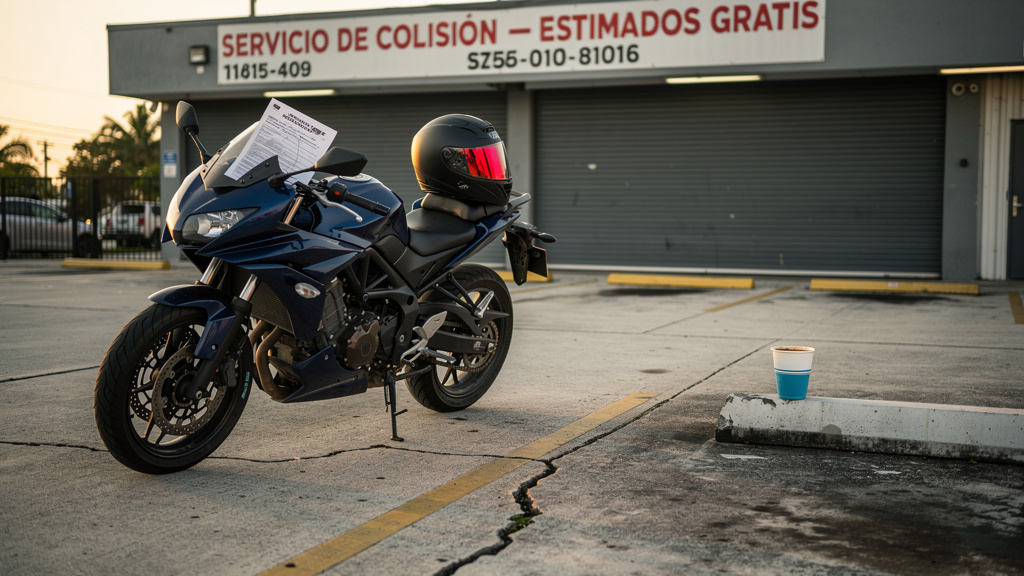
Unlike cars and trucks, motorcycles are excluded from Florida’s no-fault insurance system. That means you get no automatic $10,000 PIP benefit to cover medical bills after a crash, not from your own policy, not from the other driver’s. From day one, your claim depends on proving fault and pursuing the at-fault driver’s bodily injury coverage, your own uninsured motorist (UM) policy, MedPay, or health insurance. Because Florida now gives you only two years to file a lawsuit for crashes on or after March 24, 2023, and because you recover nothing if a jury finds you more than 50 percent at fault, both the legal clock and the battle over responsibility begin the moment you hit the pavement. In Miami-Dade, where many drivers carry no bodily injury coverage at all, your own UM policy may be the only financial safety net you have.
Does PIP cover me if I crash my motorcycle in Florida?
No. Florida law defines a “motor vehicle” for PIP purposes as a vehicle with four or more wheels [Fla. Stat. § 627.732(3)], which explicitly excludes motorcycles. This means PIP does not apply, not from your own auto policy, not from the car that hit you, not from any source tied to Florida’s no-fault system. Many riders mistakenly believe that because Florida is a “no-fault” state, they cannot sue the other driver. That is false. Without PIP, your claim depends on showing the other party was at fault. Recovering pain and suffering from the at-fault driver has its own legal threshold, explained below. For a clear explanation of how PIP works in other cases, see our overview of Florida’s PIP system.
If PIP doesn’t apply, who actually pays my medical bills?
Your medical bills will likely come from one of four sources: first, the at-fault driver’s bodily injury liability insurance, but many Miami-Dade drivers carry none, since Florida does not require it; second, your own uninsured/underinsured motorist (UM/UIM) coverage, which is optional but critically important; third, Medical Payments (MedPay) coverage on your motorcycle policy, if you bought it; and fourth, your personal health insurance, which will usually pay but may place a lien on your eventual recovery. UM coverage is optional, but under [Fla. Stat. § 627.727] it can be left off your policy only by a written rejection. If you signed that rejection, you may have no backup when the other driver is uninsured or underinsured. Do not assume the insurer’s first offer protects your interests. Learn more about how UM claims work in uninsured motorist cases.
How long do I have to sue in 2026, and does the clock stop while I negotiate?
For any motorcycle crash in Florida on or after March 24, 2023, you have exactly two years from the date of the crash to file a personal injury lawsuit [Fla. Stat. § 95.11]. The clock does not pause while you negotiate with insurers, waiting too long can kill your case, even if you’ve been in active talks. Crashes before that date may still fall under the old four-year deadline, but do not assume that applies without verification. If you were under 18 at the time of the crash, Florida law pauses the deadline only in limited situations [Fla. Stat. § 95.051], so consult an attorney immediately rather than rely on tolling. Wrongful death claims also carry a two-year deadline, running from the date of death. For details on how deadlines vary by case type, see our guide to Florida’s two-year statute of limitations.
Can I recover pain and suffering, and does my helmet (or lack of one) hurt my case?
Yes, you can recover pain and suffering, but only if you prove one of three things: a permanent injury, significant and permanent scarring or disfigurement, or permanent loss of an important bodily function [Fla. Stat. § 627.737(2)]. “No broken bones” does not mean “no real injury”; lasting soft tissue damage, nerve damage, or chronic pain can meet the threshold if properly documented. Regarding helmets: Florida law allows riders 21 and older to ride without one if they carry at least $10,000 in medical benefits coverage [Fla. Stat. § 316.211(3)(b)]. But if you weren’t wearing a helmet and suffered head injuries, the defense will argue your choice made those injuries worse, which can increase your assigned fault percentage under modified comparative negligence [Fla. Stat. § 768.81(6)]. That could reduce your recovery or wipe it out entirely if your fault exceeds 50 percent. For more on helmet rules and their impact, see our post on motorcycle helmet laws.
What if a City of Hialeah bus or Miami-Dade Transit vehicle hit me?
Crashes involving government vehicles, including City of Hialeah buses or Miami-Dade Transit, follow different rules. Before you can sue, Florida law requires you to file a formal written notice of claim with the correct government agency [Fla. Stat. § 768.28(6)]. Skipping this notice step can jeopardize your claim even if you file suit within two years. Because these deadlines and procedures are easy to miss and hard to fix later, contact a lawyer immediately if a public vehicle was involved. Do not wait to see if the city or county reaches out, they often do not.
What if I was partly at fault, or I was riding without insurance?
Florida uses modified comparative negligence [Fla. Stat. § 768.81(6)]: if you’re found 50 percent or less at fault, you can still recover, but your damages are reduced by your fault percentage. If you’re more than 50 percent at fault, you recover nothing. Actions like lane-splitting, which is illegal in Florida, will be used by the defense to push your fault percentage higher, possibly past that 50 percent line. Riding without motorcycle insurance does not automatically bar your claim against an at-fault driver. Lacking your own policy isn’t by itself a legal barrier to suing, although an uninsured rider involved in a crash can face license suspension under Florida’s financial responsibility law (Fla. Stat. ch. 324). However, without insurance, you lose access to your own UM and MedPay coverage, leaving you dependent on the other driver’s coverage or your health plan. An attorney can help assess whether your specific situation still supports a viable claim.
Frequently asked questions
The other driver ran a stop sign and has no insurance, am I just out of luck?
Not necessarily. If you have uninsured motorist (UM) coverage on your own motorcycle or auto policy, that becomes your primary source of compensation. UM is optional but must be offered to you, and you must reject it in writing for it to be excluded. Without UM, you may still pursue other options, but your recovery could be limited.
I wasn’t wearing a helmet, does that mean I can’t recover anything?
No. Not wearing a helmet does not automatically bar your claim. However, if you suffered head injuries, the defense may argue your injuries would have been less severe with a helmet, increasing your assigned fault percentage. If that pushes you over 50 percent at fault, you recover nothing.
A Miami-Dade Transit bus hit me, do I follow the same process as a regular crash?
No. Government crashes require a written notice of claim filed with the agency before you can sue. Missing this step can end your case, even if you act within two years. Consult a lawyer right away.
The crash was partly my fault, can I still recover anything?
Yes, as long as you are found 50 percent or less at fault. Your total recovery will be reduced by your percentage of fault. For example, if you are 30 percent at fault and your damages total $100,000, you would recover $70,000. If you are more than 50 percent at fault, you recover nothing.
How long do I actually have to file a lawsuit in Florida after a 2025 motorcycle crash?
You have two years from the date of the crash. This applies to all personal injury lawsuits arising from crashes on or after March 24, 2023, including those in 2025. The deadline is strict and does not pause during insurance negotiations.
Hurt in an accident in Hialeah? Call Wolfson & Leon at 305-965-3766 for a free consultation. We speak Spanish, and there is no fee unless we win.
Key facts
- PIP does not cover motorcycle crashes. Florida's no-fault statute defines 'motor vehicle' as a vehicle with four or more wheels, which explicitly excludes motorcycles. Source: Fla. Stat. § 627.732(3)
- For crashes on or after March 24, 2023, a rider has exactly two years from the crash date to file a personal injury lawsuit; missing that deadline almost always bars the claim entirely. Source: Fla. Stat. § 95.11
- A rider found more than 50 percent at fault recovers nothing; a rider found 50 percent or less at fault recovers damages reduced by their own fault percentage. Source: Fla. Stat. § 768.81(6)
- UM/UIM coverage is optional, but it can be left off a policy only by the policyholder's written rejection; when it exists, it pays when the at-fault driver has no or insufficient bodily injury coverage. Source: Fla. Stat. § 627.727
- Whether Florida's permanent-injury threshold for pain and suffering applies to a rider can depend on the facts and the coverage involved, because motorcycles are outside the PIP system; have a lawyer review it for your case. Source: Fla. Stat. § 627.737(2)
Frequently asked questions
The other driver ran a stop sign and has no insurance, am I just out of luck?
Not necessarily. If you carried uninsured motorist (UM) coverage on your own motorcycle or auto policy, that coverage can step in to pay what the at-fault driver cannot under Fla. Stat. § 627.727. UM coverage is optional in Florida and must be rejected in writing to be excluded, so check your declarations page immediately. If you have no UM coverage, the remaining options are your health insurance, any MedPay on your policy, and a direct judgment against the at-fault driver, though collecting from an uninsured driver with no assets is difficult.
I wasn't wearing a helmet, does that mean I can't recover anything?
Not automatically. Florida law permits riders 21 and older to ride without a helmet if they carry at least $10,000 in medical benefits coverage under Fla. Stat. § 316.211(3)(b). But if you suffered a head injury, the defense will argue that your injuries were caused or worsened by the absence of a helmet, which can raise your comparative-fault percentage under Fla. Stat. § 768.81(6). As long as a jury finds you 50 percent or less at fault overall, you can still recover, though your award will be reduced. See the firm's helmet law post for the full breakdown.
A Miami-Dade Transit bus hit me, do I follow the same process as a regular crash?
No. Crashes involving government vehicles, including City of Hialeah buses and Miami-Dade Transit vehicles, require a written pre-suit notice to the government entity under Fla. Stat. § 768.28(6) before you can file a lawsuit. Failing to give that notice can bar your claim, even if the lawsuit would otherwise be timely. Contact an attorney immediately after any crash involving a government vehicle, do not wait.
The crash was partly my fault, can I still recover anything?
Yes, as long as your share of fault is 50 percent or less. Under Florida's modified comparative negligence rule (Fla. Stat. § 768.81(6)), your damages are reduced by your fault percentage but not eliminated. For example, a rider found 30 percent at fault who has $100,000 in damages recovers $70,000. However, if a jury finds you more than 50 percent at fault, you recover nothing, which is why defense lawyers and insurers aggressively try to push riders' fault percentages up.
How long do I actually have to file a lawsuit in Florida after a 2025 motorcycle crash?
Two years from the date of the crash, under Fla. Stat. § 95.11, for any crash on or after March 24, 2023. That clock does not stop while you negotiate with the insurance company, many riders settle too quickly or wait too long and lose their right to sue. If the rider was under 18 at the time of the crash, Florida law pauses the deadline only in limited situations (Fla. Stat. § 95.051), so consult an attorney promptly rather than relying on any extension. See the firm's statute-of-limitations post for more detail.
This article is general information about Florida law, not legal advice, and reading it does not create an attorney-client relationship. Every case is different and past results do not guarantee a similar outcome. For advice about your situation, call Wolfson & Leon at 305-965-3766 for a free consultation.
Also available in: Versión en español
 Motorcycle accidents
 What to Expect After Hiring a Motorcycle Accident Attorney in Hialeah
After you hire a motorcycle accident attorney in Hialeah, the case moves through six predictable stages: investigation, medical treatment, demand,…
 Motorcycle accidents
 5 Florida Motorcycle Accident Myths That Can Cost You Your Claim
Five myths, about PIP coverage, helmets, lane splitting, your motorcycle endorsement, and the filing deadline, lead Florida riders to either walk…
 Motorcycle accidents
 A Car Turned Left and Hit My Motorcycle in Hialeah: Who Is at Fault?
Under Florida law, the driver turning left almost always bears primary fault. Fla. Stat. § 316.122 requires any driver making a left turn to yield…