
I Fell in the Hospital: Is It Slip-and-Fall or Medical Malpractice?
Whether your hospital fall is medical malpractice or ordinary premises liability depends on who you are and what caused the fall: patient falls tied to missed risk assessments, bed alarms left off, or unassisted bathroom trips often fall under Florida's medical malpractice framework, while falls caused by a wet floor or physical hazard may be treated as premises liability, especially for visitors. The distinction is not just a label; it changes the expert requirements, the presuit process you must complete before filing, and potentially the deadline you face. Getting the category wrong from the start can end a valid claim before it begins.
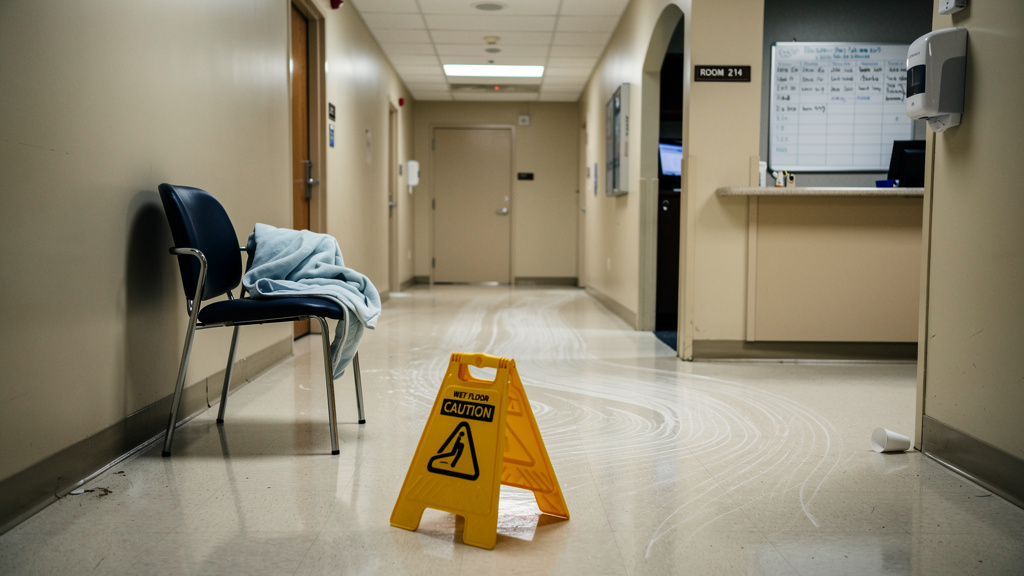
Whether your fall in a hospital is treated as medical malpractice or a slip-and-fall claim depends on who you are and what caused the fall. If you were a patient, and the fall resulted from missed clinical precautions like skipped risk assessments, unheeded bed alarms, or lack of assistance with bathroom trips, it likely falls under Florida’s medical malpractice laws. If the fall happened because of a wet floor or broken tile, and you were a visitor, it is more likely a premises liability claim. This distinction matters because each legal path has different rules about expert witnesses, pre-filing steps, and deadlines. Filing under the wrong category can lead to dismissal, even if your injuries are serious.
Why does it matter whether they call it malpractice or slip-and-fall?
The label is not just paperwork, it controls three critical factors. First, medical malpractice claims require you to serve a Notice of Intent on each potential defendant and complete a 90-day presuit screening period under Fla. Stat. § 766.106. Second, that notice must include a verified written opinion from a medical expert supporting your claim, as required by Fla. Stat. § 766.203. Third, the deadline works differently: under Fla. Stat. § 95.11, a medical malpractice claim generally must be filed within two years from when the incident was or should have been discovered, with a four-year outer limit and some exceptions, and the 90-day presuit period pauses the deadline. A premises liability claim generally follows the two-year negligence deadline for injuries on or after March 24, 2023. Courts can dismiss malpractice claims when the presuit requirements, including the expert opinion, are not met. Filing a malpractice case as a simple slip-and-fall, or vice versa, can lead to dismissal or delay, and the deadline may run out while the problem is fixed.
When is a patient fall medical negligence rather than just an accident?
A fall becomes medical negligence when it stems from a failure in clinical judgment during care, not just a floor hazard. Common scenarios include: (1) not performing or updating a fall-risk assessment using tools like the Morse Fall Scale or Hester Davis Scale after a change in condition such as new medication, post-surgery weakness, or delirium; (2) disabling bed alarms or ignoring them when fall precautions were ordered; or (3) allowing a high-risk patient to go to the bathroom unassisted. The key question is whether the hospital knew or should have known you were at risk and failed to act. Your pre-existing frailty does not excuse the hospital: under the eggshell-plaintiff doctrine, a negligent defendant is responsible for the harm it caused even to a more vulnerable patient, and a known fall risk can affect what precautions reasonable care required. In Hialeah, where many patients are older adults statistically at higher fall risk, hospitals should be applying these precautions routinely. Not every fall qualifies as negligence; the facts control. Hospitals generally document nursing care, and Florida hospitals must have a risk management program that investigates adverse incidents under Fla. Stat. § 395.0197, which can create records a lawyer may request.
What if the fall was caused by a wet floor or a physical hazard, does that change anything?
If you were a visitor, a wet floor or loose mat would be handled under premises liability law, governed by Fla. Stat. § 768.0755. To win, you must show the hospital knew or should have known about the hazard. For patients, however, some courts have treated even environmental hazards as part of the clinical duty, depending on the facts, meaning the claim may still fall under malpractice. Surveillance video, incident reports, and maintenance logs are critical here. Just as we warned in our supermarket-fall article, hospital video can be overwritten quickly. An objective timeline from footage can counter defense claims of prompt cleanup. You cannot assume which legal path applies without reviewing the details with a lawyer.
What if I was visiting a family member and I was the one who fell?
Visitors are not receiving medical care, so malpractice rules like the 90-day presuit period and expert affidavit generally do not apply. Your claim would proceed under ordinary premises liability standards under Fla. Stat. § 768.0755. Report the fall immediately, request an incident report, take photos, identify witnesses, and get medical care. If the hospital is government-owned, such as a county facility, you must serve written notice of your claim before filing suit under Fla. Stat. § 768.28(6). Failure to do so can end your claim. Visitors injured at a hospital can bring these premises liability claims, subject to the same proof rules. Confirm whether the facility is public, and act fast to preserve evidence.
What evidence exists after a hospital fall, and how fast does it disappear?
Six types of evidence matter most, and some vanish within days. First is surveillance video, which may be overwritten on short cycles, just like in grocery stores. Second, incident reports filed internally after the fall. Third, nurse-call logs showing if and when help was requested. Fourth, medication records timing sedatives or blood-pressure drugs near the fall. Fifth, the documented fall-risk assessment and care plan. Sixth, nursing shift notes detailing actual bedside actions. The gap between what was ordered and what was done often tells the real story. Hospitals generally keep these records, and Fla. Stat. § 395.0197 requires a risk management program that investigates adverse incidents. During the malpractice presuit investigation, Fla. Stat. § 766.204(1) requires medical records to be provided promptly on request, and failing to do so can have consequences for the hospital. Delay hurts, but does not automatically kill, a claim. Every day without a legal hold increases the risk evidence disappears.
Frequently asked questions
Do I have to hire a medical expert just to start a hospital malpractice claim in Florida?
Yes. Before filing a medical malpractice lawsuit, Florida law requires a verified written opinion from a qualified medical expert supporting your claim. This must be included with your Notice of Intent under Fla. Stat. § 766.203.
What if I was already frail or had osteoporosis before I fell, does that hurt my case?
No. Under the eggshell-plaintiff doctrine, a hospital is responsible for the full harm caused by its negligence, even if your pre-existing condition made you more vulnerable. Defense arguments about osteoporosis or prior mobility issues can be countered with medical testimony distinguishing baseline health from new injuries.
The hospital is run by the county. Does that change anything?
Yes. If the hospital is government-owned, you must serve written notice of your claim before filing suit under Fla. Stat. § 768.28(6). The specific timing must be confirmed with an attorney, as missing this step can permanently bar your claim.
I didn’t report the fall to the hospital right away. Did I lose my case?
Not automatically. While immediate reporting helps preserve evidence like video and incident reports, delayed reporting does not automatically end your claim. However, waiting increases the risk that critical evidence is lost or destroyed.
If I was visiting a family member and I slipped on a wet hospital floor, do I have to go through the malpractice presuit process?
Generally, no. Visitors are not patients receiving medical care, so their claims typically fall under premises liability law, not medical malpractice. That means the presuit notice and expert affidavit requirements under Fla. Stat. § 766.106 usually do not apply.
Hurt in an accident in Hialeah? Call Wolfson & Leon at 305-965-3766 for a free consultation. We speak Spanish, and there is no fee unless we win.
Key facts
- Before filing a medical malpractice lawsuit in Florida, a claimant must serve a Notice of Intent on each prospective defendant and complete a mandatory 90-day presuit screening period. Source: Fla. Stat. § 766.106
- The Notice of Intent must be accompanied by a verified written medical expert opinion corroborating reasonable grounds to support the claim of medical negligence. Source: Fla. Stat. § 766.203
- For slip-and-fall claims against a business such as a hospital under premises liability, the injured person must show the business had actual or constructive knowledge of the dangerous condition. Source: Fla. Stat. § 768.0755
- Florida's modified comparative negligence rule reduces a plaintiff's recovery by their percentage of fault and bars recovery entirely only if they are found more than 50 percent at fault; that bar does not apply to medical negligence claims. Source: Fla. Stat. § 768.81(6)
- A claimant suing a government-owned hospital must present written notice of the claim to the agency within a specific timeframe before filing suit. Source: Fla. Stat. § 768.28(6)
Frequently asked questions
Do I have to hire a medical expert just to start a hospital malpractice claim in Florida?
Yes, if your claim proceeds as medical malpractice. Before you can file suit, Florida law requires you to serve a Notice of Intent on each prospective defendant and attach a verified written opinion from a qualified medical expert stating that the care fell below the accepted standard, this is required under Fla. Stat. § 766.106 and § 766.203. A notice of intent that lacks this expert opinion can be dismissed by the court. This is one reason why getting legal counsel early matters: the presuit process has its own sequence and deadlines that run before the lawsuit even begins.
What if I was already frail or had osteoporosis before I fell, does that hurt my case?
Not necessarily. Florida applies the eggshell-plaintiff doctrine: a hospital is responsible for the full harm its negligence causes, even when the patient's underlying condition made them more vulnerable to injury. The legal question is whether the hospital's failure, not the patient's pre-existing condition, caused or contributed to the fall and the resulting harm. In fact, a patient's documented fragility may strengthen the case by showing the hospital had even more reason to implement careful fall-prevention measures.
The hospital is run by the county. Does that change anything?
Yes, significantly. If the hospital is a government-owned facility, you must serve written notice of your claim on the appropriate government agency before you can file a lawsuit, as required by Fla. Stat. § 768.28(6). Missing this step can permanently bar your claim regardless of its merits. The timing and form of that notice should be confirmed with an attorney as soon as possible after the fall.
I didn't report the fall to the hospital right away. Did I lose my case?
Delay in reporting is not automatically fatal to a claim, but it can seriously damage it. Every day without a formal preservation demand increases the chance that surveillance video is overwritten, nurse-call logs are purged, and staff memories fade. The strongest cases are built on records that reflect what was happening before, during, and after the fall, and those records do not wait. Report the fall, request an incident report, and contact an attorney promptly.
If I was visiting a family member and I slipped on a wet hospital floor, do I have to go through the malpractice presuit process?
Generally, no. Visitors are not patients receiving medical care, so the malpractice presuit requirements under Fla. Stat. § 766.106 and § 766.203 typically do not apply to them. A visitor's claim is usually analyzed under premises liability: the hospital must have had actual or constructive knowledge of the dangerous condition under Fla. Stat. § 768.0755. Document the scene immediately, request an incident report, and preserve any evidence of how long the hazard existed, surveillance footage is especially important and can be lost quickly.
This article is general information about Florida law, not legal advice, and reading it does not create an attorney-client relationship. Every case is different and past results do not guarantee a similar outcome. For advice about your situation, call Wolfson & Leon at 305-965-3766 for a free consultation.
Also available in: Versión en español
 Medical malpractice
Can You Trust Avvo, Justia, or Super Lawyers to Pick a Miami Medical Malpractice Lawyer?
Avvo, Justia, and Super Lawyers are useful starting points, but none of them will show you whether a lawyer has actually taken medical malpractice…
 Medical malpractice
Which Law Firms Handle Medical Malpractice Cases in Miami-Dade County?
Medical malpractice cases in Miami-Dade County are handled by three broad types of firms: practices that focus primarily on malpractice, general…
 Medical malpractice
Can I Sue Jackson Memorial Hospital for Negligence in Miami-Dade?
Yes, you can sue Jackson Memorial Hospital for negligence, but the rules are significantly different from suing a private hospital. Because Jackson…