
Hit Crossing W 49th Street Outside the Crosswalk, Can I Still Recover?
Yes, crossing outside a marked crosswalk does not erase your right to recover. Florida law still requires every driver to exercise due care to avoid hitting any pedestrian, regardless of where the crossing happened. Your recovery is reduced by your share of fault and cut off entirely only if you are found more than 50 percent at fault under Fla. Stat. § 768.81(6).
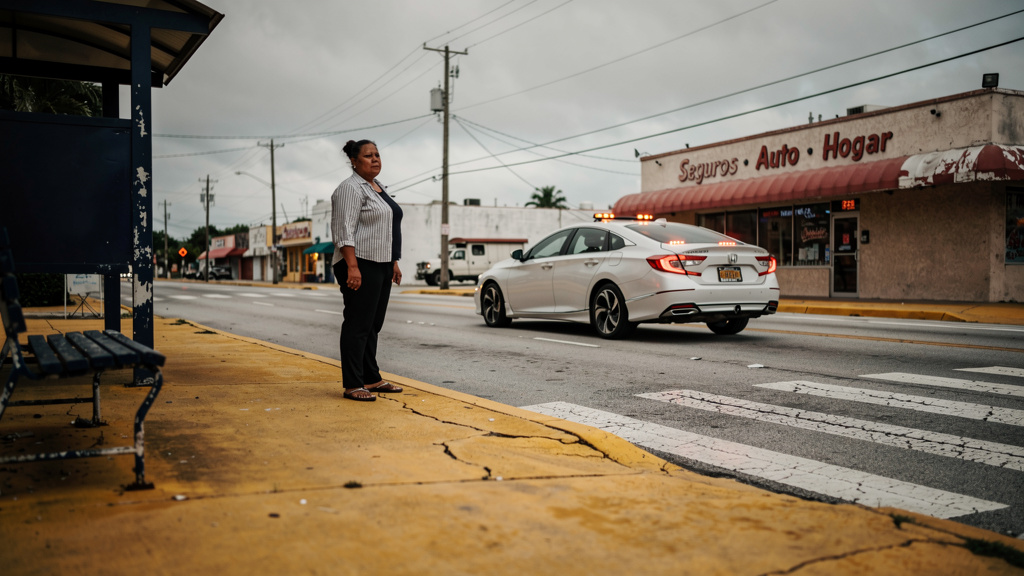
Yes, crossing outside a marked crosswalk does not erase your right to recover. Florida law still requires every driver to exercise due care to avoid hitting any pedestrian, regardless of where the crossing happened. Your recovery is reduced by your share of fault and cut off entirely only if you are found more than 50 percent at fault under Fla. Stat. § 768.81(6).
Does it matter that I was in a marked crosswalk, and what changes if I wasn’t?
Inside a marked crosswalk, Florida law gives pedestrians strong protection. Under Fla. Stat. § 316.130, drivers must yield the right of way. If they fail, that violation is strong evidence of the driver’s negligence. Outside a crosswalk (a marked one, or the unmarked crosswalk at an intersection), such as mid-block on W 49th Street, the law flips: Fla. Stat. § 316.130(10) says pedestrians must yield to vehicles. Crossing mid-block when a marked crosswalk is nearby can be used as evidence of negligence. W 49th Street and nearby Okeechobee Road are wide, multi-lane corridors where crosswalks may be spaced far apart. Many pedestrians cross mid-block out of necessity, not convenience. But even then, Fla. Stat. § 316.130(15) remains clear: “Every driver of a vehicle shall exercise due care to avoid colliding with any pedestrian.” The idea that “no crosswalk means the driver automatically wins” is false. Fault can be shared, and the driver’s conduct always matters.
What if I was crossing against the signal or mid-block, does the driver still owe me anything?
Yes. Even if you crossed mid-block or against a signal, the driver still had duties under Fla. Stat. § 316.130(15). They must exercise due care and sound their horn when necessary to avoid a collision. If the driver never braked, never honked, and never swerved, that suggests they were not paying attention, regardless of where you crossed. On wide roads like W 49th Street, insurers often claim the pedestrian “came out of nowhere.” But a driver traveling at a safe speed with proper lookout should see and react to a visible person. Where there are bus stops along a corridor, pedestrians may cross mid-block to reach them. Insurers know this and use it to argue fault, but the driver’s own actions, speed, distraction, failure to signal, can outweigh the pedestrian’s mistake. The law does not excuse inattentive driving just because someone crossed outside a crosswalk.
How does Florida split fault, and when does my percentage kill the whole claim?
Florida uses modified comparative fault. Under Fla. Stat. § 768.81, your recovery is reduced by your share of fault, but you lose everything only if you are found more than 50 percent at fault. At exactly 50 percent, you can still recover half your damages. For example: if total damages are $200,000 and you are 40 percent at fault, you get $120,000. If you are 51 percent at fault, you get nothing. This threshold is why the fault percentage is often hotly disputed: above 50 percent, there is no payment at all. This rule changed in 2023 under HB 837, replacing Florida’s old system that allowed recovery even at 99 percent fault. Now, staying at or below 50 percent is critical, which is why evidence about the driver’s speed, attention, and reaction matters so much.
Will my own PIP insurance pay my medical bills no matter what, even if the crash was partly my fault?
Yes, PIP pays regardless of fault, but only if you act fast. Under Fla. Stat. § 627.736, your own auto insurance policy covers you first, even as a pedestrian. If you do not have one, a resident relative’s policy applies. Only if neither exists does the striking vehicle’s PIP cover you, if you are a Florida resident. PIP pays 80 percent of reasonable medical bills and 60 percent of lost wages, up to $10,000 if a doctor diagnoses an emergency medical condition, or just $2,500 if not. You must get initial treatment within 14 days of the crash, or PIP pays nothing. Do not assume the other driver’s insurer will cover your bills, that is not how PIP works. Because pedestrian injuries often exceed PIP limits, you may need to pursue the at-fault driver’s bodily injury coverage or your own uninsured/underinsured motorist (UM) coverage, which is optional but must be rejected in writing [Fla. Stat. § 627.727].
What evidence actually moves the fault percentage in my favor?
Evidence determines whether your fault stays at or below 50 percent. Key types include: surveillance video from stores along W 49th Street or traffic cameras, which can be erased quickly; dashcam footage from the striking car or others nearby; proof of the driver’s speed (exceeding the limit on a multi-lane road); phone records showing distraction; lighting and visibility conditions at the crash site; your clothing and position in the road; and vehicle event data recording braking or steering inputs. The crash report is also vital, but under Fla. Stat. § 316.066, it is confidential for 60 days except to parties, insurers, and attorneys. If you were crossing toward or from a bus stop, that context may explain your location. An attorney can send preservation letters immediately to save video and access the police report early.
What should I never say to the driver’s insurance adjuster, and what should I do instead?
Do not give a recorded statement to the other driver’s insurance company. Adjusters call quickly and sound helpful, but what you say can be used to assign you more than 50 percent fault, which would end your claim entirely. Do not say things like “I shouldn’t have crossed there” or “I didn’t see the car”, those become admissions. Do not accept a quick settlement before knowing the full extent of your injuries; pedestrian trauma often worsens over days. And do not skip medical care: you must treat within 14 days for PIP to pay anything, and gaps in care are used to argue your injuries are minor. Instead: call 911, get a police report, take photos of the scene and vehicle, collect witness names, seek medical care immediately, and contact a pedestrian accident lawyer before speaking further with insurers. Remember, you have two years from the crash date to file a lawsuit under Fla. Stat. § 95.11.
Frequently asked questions
I crossed W 49th Street mid-block and got hit. Does that mean I automatically lose my case in Florida?
No. Crossing outside a crosswalk is not an automatic bar to recovery. Florida law still requires drivers to exercise due care to avoid hitting pedestrians anywhere on the road. Your recovery may be reduced by your share of fault, but you can still recover if you are found 50 percent or less at fault.
The driver’s insurance company called me the day after the crash and wants a recorded statement. Should I give one?
No. Anything you say can be used to argue you were more than 50 percent at fault, which would eliminate your entire claim. Refer them to your attorney or tell them you are not giving statements until you understand your rights and injuries.
Will my own car insurance cover my medical bills even though I was on foot when the crash happened?
Yes. Your own PIP coverage applies first when you are injured as a pedestrian. If you do not have auto insurance, a resident relative’s policy may cover you. The striking driver’s PIP is only a last resort. But you must seek treatment within 14 days for any PIP benefits to apply.
The police report says I was jaywalking. Does that end my claim?
No. A police report is not final proof of fault. Officers often rely on initial impressions. Evidence like video, witness statements, or vehicle data can show the driver failed to keep a proper lookout or was speeding. Jaywalking may contribute to fault, but it does not automatically make you more than 50 percent responsible.
How long do I have to file a lawsuit after being hit as a pedestrian in Hialeah?
You have two years from the date of the crash to file a personal injury lawsuit in Florida if your injury occurred on or after March 24, 2023 [Fla. Stat. § 95.11]. This deadline applies even if the police investigation is ongoing or your injuries are still being treated.
Related reading: Partly at Fault for a Hialeah Crash? Here Is What You Can Still Recover · No, You Do Not Have to Give the Other Driver’s Insurer a Recorded Statement
Hurt in an accident in Hialeah? Call Wolfson & Leon at (305) 285-7071 for a free consultation. We speak Spanish, and there is no fee unless we win.
Key facts
- Every driver must 'exercise due care to avoid colliding with any pedestrian' on the roadway, even a pedestrian who is outside a crosswalk or crossing against the signal. Source: Fla. Stat. § 316.130(15)
- A pedestrian's recovery is reduced by their percentage of fault but is barred entirely only when their fault exceeds 50 percent, being found exactly 50 percent at fault still allows recovery. Source: Fla. Stat. § 768.81 and § 768.81(6)
- Personal Injury Protection pays 80 percent of reasonable medical bills and 60 percent of lost income regardless of who caused the crash, up to $10,000 when a doctor finds an emergency medical condition, or up to $2,500 otherwise, but only if the injured person receives initial treatment within 14 days of the crash. Source: Fla. Stat. § 627.736
- The PIP policy that pays first is the injured pedestrian's own policy; if they have none, a resident relative's policy; only if neither exists does the striking vehicle's PIP cover a Florida-resident pedestrian. Source: Fla. Stat. § 627.736(4)(e)
- A pedestrian who was crossing outside a crosswalk when a nearby marked crosswalk was available gives the defense a statutory hook for assigning greater fault, because Florida treats that as a failure to yield to vehicles. Source: Fla. Stat. § 316.130(10)
Frequently asked questions
I crossed W 49th Street mid-block and got hit. Does that mean I automatically lose my case in Florida?
No. Crossing mid-block means you were required to yield the right of way to vehicles under Fla. Stat. § 316.130(10), and a jury can assign you a share of fault for that. But Fla. Stat. § 316.130(15) separately requires every driver to exercise due care to avoid hitting any pedestrian, regardless of where the crossing happened. If the driver was speeding, distracted, or failed to keep a proper lookout, the driver violated that independent duty. Your recovery is reduced by your share of fault and only barred entirely if your fault exceeds 50 percent under Fla. Stat. § 768.81(6).
The driver's insurance company called me the day after the crash and wants a recorded statement. Should I give one?
No. The driver's insurer is not on your side, its goal is to minimize what it pays, which under Florida's modified comparative fault system means building the case that you were more than 50 percent at fault, which would wipe out your entire recovery. A recorded statement gives adjusters the opportunity to use your own words against you. Decline politely, say you are represented by or consulting an attorney, and contact a pedestrian accident lawyer before saying anything substantive to the other driver's insurer.
Will my own car insurance cover my medical bills even though I was on foot when the crash happened?
Possibly yes. Under Fla. Stat. § 627.736(4)(e), your own PIP policy follows you as a pedestrian and pays first, before any other policy does. PIP covers 80 percent of reasonable medical bills and 60 percent of lost income regardless of who caused the crash, up to $10,000 if a doctor finds an emergency medical condition, or up to $2,500 if no such condition is found. You must receive initial treatment within 14 days of the crash or PIP pays nothing at all. If you have no PIP policy of your own, a resident relative's policy may apply next.
The police report says I was jaywalking. Does that end my claim?
No. A traffic citation or a notation of jaywalking in a crash report is evidence that can inform how fault is allocated, but it does not determine the outcome of a civil claim. The crash report itself is confidential for 60 days except to the parties, their insurers, and their attorneys under Fla. Stat. § 316.066. Even if you violated § 316.130(10) by crossing outside a crosswalk, the driver's independent duty under § 316.130(15) to exercise due care remains. A pedestrian found partly at fault can still recover as long as their share does not exceed 50 percent under § 768.81(6).
How long do I have to file a lawsuit after being hit as a pedestrian in Hialeah?
For crashes that occurred on or after March 24, 2023, you have two years from the date of the crash to file a personal injury lawsuit under Fla. Stat. § 95.11. That deadline does not pause because you are negotiating with an insurance company, and negotiations can drag on. If you miss the two-year deadline, your claim is permanently barred regardless of how strong the evidence is. Contact an attorney well before that date so evidence can be preserved and the claim properly evaluated.
This article is general information about Florida law, not legal advice, and reading it does not create an attorney-client relationship. Every case is different and past results do not guarantee a similar outcome. For advice about your situation, call Wolfson & Leon at (305) 285-7071 for a free consultation.
Also available in: Versión en español
 Pedestrian and bicycle accidents
 Hit by a Car While Walking in Hialeah: What Is the First Step?
The first step is medical care, even if you feel fine enough to walk away, Florida law requires treatment within 14 days of the crash or you forfeit…
 Pedestrian and bicycle accidents
 Hit by a Car in Hialeah? Here Is What to Do Right Now
Call 911 immediately if anyone is hurt, stay at the scene, and get the driver's name, license, registration, and insurance information before you do…