
Big Chain or Small Market in Hialeah: Does It Change Your Slip-and-Fall Case?
The legal standard is the same no matter what size store you fell in, under Fla. Stat. § 768.0755, you must prove the business had actual or constructive knowledge of the hazard and failed to fix it. What does differ is who pays, how fast they respond, and how much insurance stands behind the claim: a national chain typically has layers of corporate claims infrastructure and substantial coverage, while a small neighborhood market may carry a modest liability policy, or, in some cases, none at all. Knowing who is actually responsible, the store operator, the shopping-plaza landlord, or an outside contractor, can be just as important as knowing where you fell.
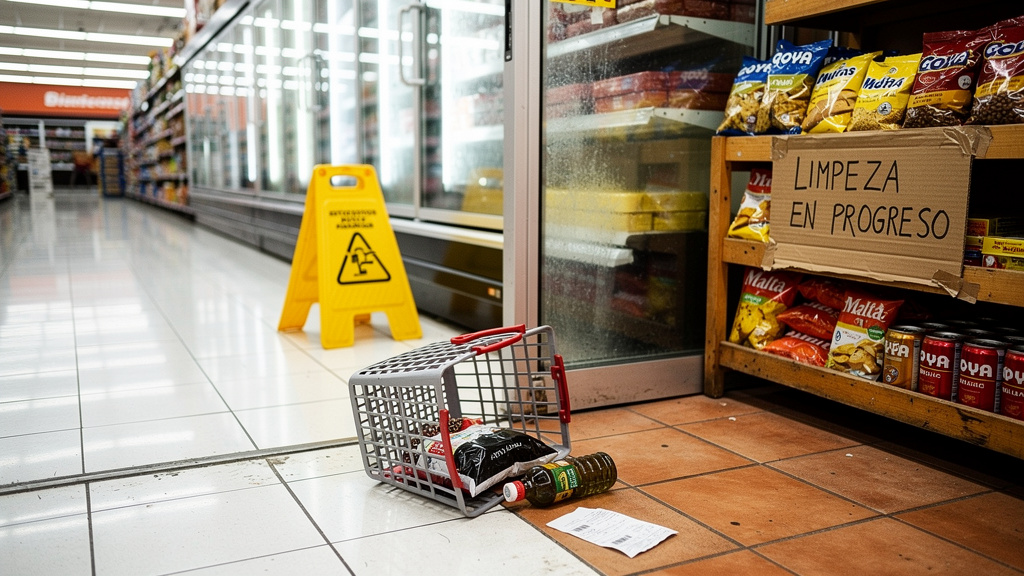
The legal standard is the same whether you fell at a national supermarket chain or a small Hialeah bodega. Under Florida Statute § 768.0755, you must prove the business knew or should have known about the dangerous condition and failed to fix it. What changes is who pays and how fast they act. National chains usually carry substantial liability insurance and have corporate claims teams that respond quickly with investigators and attorneys. Small stores may have limited or no coverage, making collection harder even if your case is strong. Identifying the right responsible party, the store operator, landlord, or an outside contractor, is often as important as proving the fall itself.
What is different about falling at a national chain like Publix or Walmart in Hialeah?
National chains such as Publix and Walmart operate many stores across Hialeah and Miami-Dade, but the law that applies to them is the same as for any other business: Florida Statute § 768.0755 requires proof that the store had actual or constructive knowledge of the hazard. The difference lies in resources. Large retailers in general may handle claims through corporate claims departments or outside claims administrators, which can move quickly to review surveillance footage, take recorded statements, and build a defense. That recorded statement you give before talking to a lawyer can lock in facts about how long a spill was on the floor, which goes directly to the core issue under § 768.0755. Surveillance video can be overwritten quickly, so an immediate preservation letter from an attorney is critical. Every case depends on its own facts, and an early offer is not necessarily a fair one.
What happens when the store is a smaller chain or a neighborhood market, like those along West 49th Street, Palm Avenue, or East 4th Avenue in Hialeah?
The legal burden under § 768.0755 does not change for a small market. You still must show the store knew or should have known about the hazard. The practical challenge lies in insurance. Many independent stores carry commercial general liability policies with lower limits than national chains, and some very small operators may be underinsured or carry no liability coverage at all. This does not erase your claim, but it affects whether you can collect a judgment if you win. Some of these markets lease space in shopping plazas, meaning the landlord’s insurance might also apply. Sedano’s, which is understood to have roots in Hialeah and operates multiple South Florida locations, represents a middle tier between national giants and true independents, though its specific claims structure is not publicly detailed. At small, family-run markets, insurance details are not always obvious to shoppers.
What if the fall happened in the parking lot, on the sidewalk, or in a common area, who is responsible then?
Many Hialeah stores sit inside shopping plazas where the parking lot, sidewalks, and walkways are owned by a separate landlord entity, not the store tenant. The store’s lease usually spells out who is responsible for maintaining each part of the property. If you slipped in the lot or on an exterior walkway, the landlord may owe you a duty of care as the property owner. You could have valid claims against both the store and the landlord. If the hazard was a transitory substance like water or fruit, § 768.0755 still applies to whichever party controlled that area. If the fall resulted from broken pavement, poor lighting, or another structural defect, general negligence principles govern instead. The two-year deadline under § 95.11 runs from the date of your fall, no matter who is ultimately liable. Finding out who maintained the exact spot requires reviewing the lease, an early step your attorney can take.
Can an outside contractor, a cleaning company, refrigeration service, or maintenance crew, be the one who is actually at fault?
Yes. Stores routinely hire outside vendors for cleaning, refrigeration maintenance, and repairs. If a contractor created or failed to address a hazard, like leaving a wet floor unmarked or neglecting a leaking cooler unit, they can be held directly liable. These contractors may carry their own insurance, separate from the store’s policy. Both the store and the contractor may share responsibility. The store is still judged under § 768.0755: did it know or should it have known the contractor left a hazard? Recurring issues, like condensation from cooler units that regularly pool water in aisles, can show the condition was foreseeable, which can help satisfy the “regularity” prong of constructive knowledge under § 768.0755(1)(b). Identifying these contractors requires access to vendor agreements, which an attorney can request right away.
Does the same Florida law apply to every store, big or small, and what deadlines must I know?
Yes. Florida Statute § 768.0755 applies to every business, regardless of size. Modified comparative negligence under § 768.81(6) also applies universally, if you are found more than 50 percent at fault, you cannot recover. The statute of limitations is two years from the date of the fall for injuries on or after March 24, 2023 (§ 95.11). Earlier falls had a four-year window. Falling in a store does not automatically entitle you to compensation; the notice element under § 768.0755 is the key issue. And no, failing to report the fall on the spot does not kill your claim, it just makes proof harder. Take photos, get the incident report number and manager’s name, keep your medical records, and do not speak to any adjuster until you talk to a lawyer. Surveillance video disappears fast, an attorney can send a preservation letter immediately to protect your evidence.
Frequently asked questions
Does a big chain like Publix or Walmart have to follow the same rules as a tiny corner store in Hialeah?
Yes. Florida Statute § 768.0755 applies equally to every business open to the public, no matter its size or brand. The legal test, proving the business knew or should have known about the hazard, is identical.
What if the small market where I fell doesn’t seem to have much insurance or any insurance at all?
Your legal claim may still be valid, but collecting compensation becomes harder if the store has low or no liability coverage. In some cases, other parties, like a landlord or contractor, may provide additional sources of recovery.
I fell in the parking lot of a Hialeah shopping plaza, not inside the store, does that change who I sue?
It might. Parking lots and walkways are often owned by a landlord, not the store. Your claim could lie with the property owner, the tenant, or both, depending on who controlled and maintained the area where you fell.
How long do I have to file a lawsuit after a slip and fall at a Hialeah grocery store?
For falls on or after March 24, 2023, you have two years from the date of the injury under Florida Statute § 95.11. Earlier falls had a four-year deadline. Do not wait, the clock starts ticking the day you fall.
I slipped on the sidewalk right outside a store on a busy Hialeah street, is the store responsible or is that the city’s problem?
It depends on who owns the sidewalk. If it’s a municipal sidewalk maintained by the City of Hialeah or Miami-Dade County, special notice rules apply before you can sue. If it’s part of a private shopping plaza, the landlord or store may be responsible. The distinction is not always obvious visually.
Related reading: I fell in a store in Hialeah. Can I make a claim? · The 14-day PIP rule in Florida: what happens if you wait to see a doctor after a Hialeah car accident · How long do I have to file an injury lawsuit in Florida? The two-year rule after HB 837 · The driver who hit me in Hialeah has no insurance. What now?
Hurt in an accident in Hialeah? Call Wolfson & Leon at 305-965-3766 for a free consultation. We speak Spanish, and there is no fee unless we win.
Key facts
- Florida Statute § 768.0755 requires any injured person, regardless of store size, to prove the business had actual or constructive knowledge of the transitory foreign substance and should have remedied it. Source: Fla. Stat. § 768.0755
- The statute of limitations for a negligence injury claim arising on or after March 24, 2023 is two years from the date of the fall. Source: Fla. Stat. § 95.11
- A claimant who is found more than 50 percent at fault for their own fall is barred from any recovery under Florida's modified comparative negligence rule. Source: Fla. Stat. § 768.81(6)
- Claims against the City of Hialeah or Miami-Dade County, such as a fall on a public sidewalk or parking area immediately adjacent to a store, require written notice to the government before a lawsuit can proceed. Source: Fla. Stat. § 768.28(6)
- Constructive knowledge of a hazard can be established through circumstantial evidence showing the condition existed long enough that the business should have discovered it, or that the condition occurred with regularity and was therefore foreseeable. Source: Fla. Stat. § 768.0755(1)
Frequently asked questions
Does a big chain like Publix or Walmart have to follow the same rules as a tiny corner store in Hialeah?
Yes. Florida Statute § 768.0755 applies to every business establishment regardless of size, and the injured person must prove actual or constructive knowledge of the hazardous condition at every store. What differs is not the legal standard but the practical landscape: a national chain typically has more staff, more surveillance systems, and more insurance behind it, while a small independent market may have limited coverage. Your burden of proof is the same either way.
What if the small market where I fell doesn't seem to have much insurance or any insurance at all?
You may still have a valid legal claim even if the store is underinsured or, in some cases, carrying no liability coverage. A judgment against an uninsured business can be difficult to collect, but the analysis does not end there. The shopping-plaza landlord, an outside cleaning contractor, or another responsible party may carry separate coverage. An attorney can investigate all potential sources of recovery before concluding that a claim is unenforceable.
I fell in the parking lot of a Hialeah shopping plaza, not inside the store, does that change who I sue?
It may. Parking lots and exterior common areas in shopping plazas are frequently owned and maintained by the landlord entity, not the store tenant. If the landlord controlled the area where you fell and failed to maintain it safely, the landlord may bear responsibility independently of the store. Your attorney will need to review the lease and property records to identify who had maintenance obligations for the precise spot where you fell.
How long do I have to file a lawsuit after a slip and fall at a Hialeah grocery store?
For falls that occurred on or after March 24, 2023, Florida law gives you two years from the date of the fall to file a lawsuit under Fla. Stat. § 95.11. For falls before that date, a four-year window applied. Do not wait to act: surveillance footage can be overwritten quickly, cleaning logs are recycled, and the physical condition of the hazard changes. An attorney can send a preservation letter immediately to lock in available evidence.
I slipped on the sidewalk right outside a store on a busy Hialeah street, is the store responsible or is that the city's problem?
It depends on who owns and maintains that sidewalk. If the sidewalk is city or county property, any claim against the City of Hialeah or Miami-Dade County requires written notice of claim under Fla. Stat. § 768.28(6) before you can file suit, and failing to serve that notice correctly can bar your case entirely. If the sidewalk is part of a privately owned shopping plaza, different rules apply and the landlord or store may be responsible. Hialeah's commercial corridors mix public and private walkways, and the distinction is not always visible from the outside.
This article is general information about Florida law, not legal advice, and reading it does not create an attorney-client relationship. Every case is different and past results do not guarantee a similar outcome. For advice about your situation, call Wolfson & Leon at 305-965-3766 for a free consultation.
Also available in: Versión en español
 Slip and fall
 Slip-and-Fall vs. Car Accident Claims in Florida: What Hialeah Residents Need to Know
No. A car accident claim in Florida starts with your own PIP coverage paying first, up to $10,000 in medical and wage benefits, and pain and…
 Slip and fall
 They Handed Me an English Form to Sign After I Fell: What Now?
Do not sign a document you cannot read, ask for a copy first and take it with you before putting your name on anything. The incident report is a…
 Slip and fall
 Slip-and-Fall Settlement: How Much Money Do You Actually Keep?
The settlement number your attorney announces is not the check you deposit. Before you see a dollar, the contingency fee, costs the firm advanced to…