
After a Wrongful Death Settlement, Where Does the Money Actually Go?
A Florida wrongful death settlement is not handed directly to the family. The personal representative receives the gross amount first, then attorney fees, litigation costs, and any medical or government liens are resolved before the remainder is divided, unequally, based on each survivor's provable losses under Fla. Stat. § 768.21, not by headcount. When minor children share in the recovery, court approval is generally required before their shares are paid.
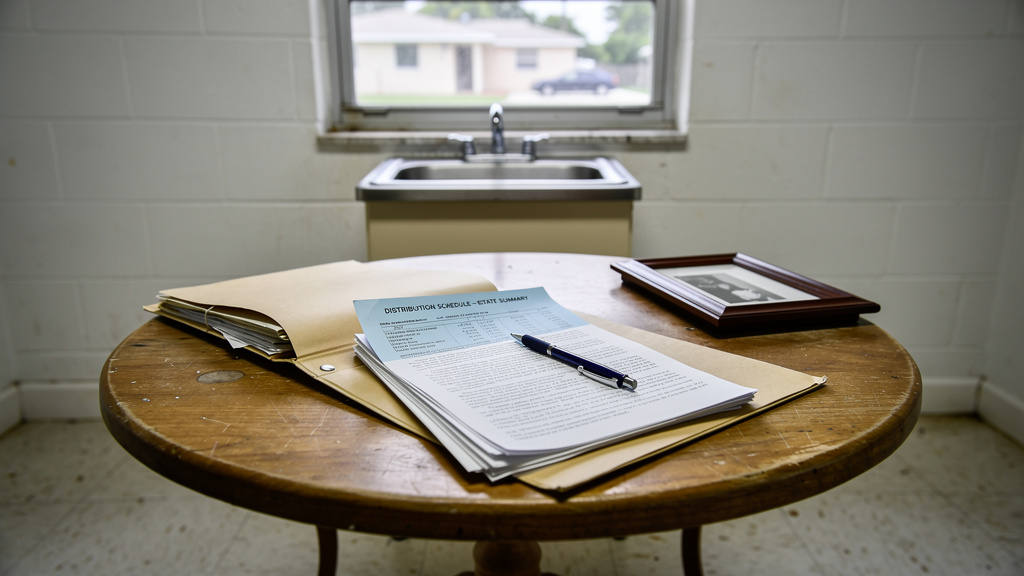
A Florida wrongful death settlement is not handed directly to the family. The personal representative receives the gross amount first, then attorney fees, litigation costs, and any medical or government liens are resolved before the remainder is divided, unequally, based on each survivor’s provable losses under Fla. Stat. § 768.21, not by headcount. When minor children share in the recovery, court approval is generally required before their shares are paid.
What comes out of the settlement before anyone in the family sees a dollar?
The number announced as the “settlement” is the gross amount. No family member receives that full figure. Before any disbursement, three layers come off the top. First, valid liens for the decedent’s pre-death medical treatment, from hospitals, health insurers, Medicare, or Medicaid, must be identified and resolved. Second, the attorney fee is deducted based on the written contingency agreement. Florida Bar Rule 4-1.5(f)(4)(B) caps that fee at 33 1/3 percent of any recovery up to $1 million before the defendant files an answer or the right to arbitration is demanded, and 40 percent after that point through trial. Third, litigation costs, such as filing fees, expert witness fees, and medical record retrieval, are subtracted. These costs are separate from the attorney fee. While the exact sequence can vary by case, lien resolution usually occurs early because unresolved liens can delay or jeopardize the entire distribution. The gap between gross and net is often large, and the family only shares in what remains after these deductions.
What happens to medical bills, health insurance, Medicare, and Medicaid, do they get repaid from the settlement?
Yes. Health insurers, Medicare, Medicaid, and sometimes hospitals may assert a right to repayment from the settlement for care provided to the decedent before death. This is not a myth, it is a legal obligation under both state and federal law. However, the amount they can claim is often less than the full billed charge. For example, Florida Medicaid lien amounts are governed by Fla. Stat. § 409.910, which includes a formula that can be contested administratively. Medicare reduces its claim by a proportionate share of attorney fees and costs under federal rules, which can significantly lower the repayment demand. ERISA-governed self-funded employer health plans tend to have the strongest reimbursement rights under federal law. Some Florida counties also allow hospital liens by local ordinance. Because failing to address these claims properly can expose the personal representative to personal liability, negotiating them down, based on actual payments, not inflated billed amounts, is a critical part of maximizing the family’s net recovery.
How is the remaining money split between the estate and each survivor, and why isn’t it equal?
The net settlement is divided into two distinct categories under Fla. Stat. § 768.21. One category belongs to the estate: this includes damages for lost net accumulations (what the deceased would have saved), funeral expenses, and pre-death medical costs. These funds pass through probate and can be claimed by the decedent’s creditors. The second category belongs directly to individual survivors: damages for lost support and services (§ 768.21(1)), loss of companionship and mental pain and suffering (§ 768.21(2) for spouses; § 768.21(3) for minor children). These survivor-specific damages are generally protected from the decedent’s creditors. The allocation between these categories is not automatic or equal. It is based on each person’s documented losses, financial dependency, emotional bond, and other provable harms. In deaths caused by medical malpractice, the law on whether adult children or the parents of an adult child can recover certain damages has been changing, so a lawyer must check the current law.
When a child is a beneficiary, what does court approval actually involve?
If a minor child receives any portion of a wrongful death settlement, Florida law requires court oversight. Under Fla. Stat. § 744.387 and related law, the court generally must review and approve the settlement of a minor’s claim before funds are released; for Hialeah families, that is typically the Miami-Dade circuit court. If the child’s share is above an amount set by statute, a formal guardianship of the property may be required. For larger settlements, the court may also appoint a guardian ad litem to independently represent the child’s interests. The closing statement submitted to the court must clearly show: the gross settlement, attorney fees, litigation costs, lien resolutions, the estate’s allocation, and each survivor’s individual share with specific dollar amounts. At Wolfson & Leon, we explain these closing statements in Spanish for our Hialeah and Miami-Dade clients so families fully understand every line before court approval.
What if survivors disagree about how the settlement should be split?
Disagreements over allocation are common and legally expected. The personal representative, appointed to act on behalf of the estate and all survivors, proposes a division based on provable losses under Fla. Stat. § 768.21, not family expectations or the decedent’s will. If survivors cannot agree, the representative may ask the court to decide the proper allocation. The court reviews both the fairness of the total settlement and the reasonableness of each person’s assigned share. Equal division is not required or presumed. One approach courts may use is a pro-rata method: each survivor’s proven damages are calculated as a percentage of the total damages, and that same percentage is applied to the actual net settlement. The decedent’s last will has no effect on who receives wrongful death proceeds, only the statute controls.
Walk me through the deductions step by step, what does this look like in practice?
Imagine a settlement is reached. Before distribution begins, any medical or government liens for the decedent’s pre-death treatment are identified and resolved, this amount varies by case and is often negotiated down. Next, the attorney fee is calculated on the gross amount under the written contingency agreement; if the case required litigation, the fee percentage is higher than if it settled early. Litigation costs are then subtracted. What remains is the net settlement. The personal representative and attorney then allocate the net between the estate’s claims and each individual survivor’s claims based on provable losses under Fla. Stat. § 768.21. If a minor child receives a share above the statutory threshold, that portion is held until the Miami-Dade circuit court reviews and approves the allocation. Only after all these steps does each survivor receive their individual disbursement.
Frequently asked questions
Does the wrongful death settlement go through probate before the family gets paid?
Only the portion allocated to the estate, such as funeral costs or lost net accumulations, flows through probate and is subject to creditor claims. Damages awarded directly to survivors for their personal losses bypass probate and go straight to them after court approval if required.
Can the hospital or Medicare take money out of my family’s wrongful death settlement?
Yes, but only for the decedent’s pre-death medical treatment, and usually only up to the amount actually paid, not the full billed charge. These claims must be resolved before final distribution, and they are often reduced through negotiation.
Is the wrongful death settlement taxable in Florida?
Generally, no. Compensation for physical injury or death is not considered taxable income under federal or Florida law. However, interest earned on settlement funds or allocations for punitive damages (rare in Florida) may carry tax implications.
My minor children are beneficiaries, do I need to go to court before they receive their share?
Generally, yes. Court approval is generally required for a minor’s share of a wrongful death settlement; for Hialeah families, that typically means the Miami-Dade circuit court. Above an amount set by statute, a guardianship may be required to manage the funds until the child turns 18.
What if I disagree with how the personal representative wants to divide the settlement?
You have the right to object. The court can review the proposed allocation and determine each survivor’s share based on their documented losses under Florida law, not assumptions of equality or family dynamics.
Hurt in an accident in Hialeah? Call Wolfson & Leon at 305-965-3766 for a free consultation. We speak Spanish, and there is no fee unless we win.
Key facts
- Attorney fees and litigation costs are deducted from the gross settlement before any distribution to survivors or the estate, and each deduction is proportional to what that party was awarded, unless a cost was incurred for one specific survivor, in which case it comes from that survivor's share alone. Source: Fla. Stat. § 768.26
- Damages allocated to the estate, such as lost net accumulations and pre-death medical and funeral expenses, are generally subject to the decedent's creditors under probate law; damages awarded directly to individual survivors for their personal losses generally are not. Source: Fla. Stat. § 768.21
- Distribution of a wrongful death settlement to a minor child generally requires court approval; above an amount set by statute, Florida law may require a legal guardianship of the property for that child. Source: Fla. Stat. § 744.387; Fla. Stat. § 744.301
- A surviving spouse, child, parent, or qualifying dependent may each recover different amounts because each person's share is based on their individual documented losses, lost financial support, lost companionship, mental pain and suffering, not an automatic equal split. Source: Fla. Stat. § 768.21
- While a wrongful death lawsuit is pending, a settlement or apportionment among survivors that a survivor objects to, or that affects a minor or incompetent survivor, generally is not effective unless the court approves it. Source: Fla. Stat. § 768.25
Frequently asked questions
Does the wrongful death settlement go through probate before the family gets paid?
Not entirely. Damages awarded directly to individual survivors, such as a spouse's loss of companionship or a child's loss of parental guidance, are not part of the probate estate and are paid directly to those survivors. However, damages allocated to the estate itself, such as lost net accumulations or pre-death medical expenses, do flow through the estate and can generally be reached by the decedent's creditors under Florida law. How the settlement is allocated between the estate and individual survivors matters enormously and should be structured carefully.
Can the hospital or Medicare take money out of my family's wrongful death settlement?
Potentially, yes. Health insurers, Medicare, Medicaid, and in some cases hospitals may assert liens or reimbursement rights against the settlement for medical treatment the decedent received before death. These claims are real and must be addressed before funds are distributed, ignoring them can create liability for the personal representative. The amount owed is often negotiable, and in many cases a skilled attorney can reduce what these parties recover, which directly increases what the family keeps.
Is the wrongful death settlement taxable in Florida?
Most compensatory wrongful death settlement proceeds are not taxable under federal law, and Florida has no state income tax. However, punitive damages and any interest earned on the settlement are generally taxable. Families should consult a tax professional about their specific situation, because the tax treatment depends in part on how the settlement is structured and allocated.
My minor children are beneficiaries, do I need to go to court before they receive their share?
Yes, in most cases. Florida law requires court approval before a minor child's share of a wrongful death settlement is distributed when the amount exceeds certain statutory thresholds, and a guardianship or guardian ad litem may also be required depending on the size of the recovery. In Miami-Dade County, this review goes through the circuit court. The court examines both the overall settlement and each survivor's proposed share, the process protects the child's funds and ensures the allocation is fair and documented.
What if I disagree with how the personal representative wants to divide the settlement?
If survivors cannot agree on how the net proceeds should be allocated, a Florida court can be asked to resolve the dispute. Under Fla. Stat. § 768.20, the personal representative brings the claim on behalf of all eligible survivors, but the allocation among them must reflect each person's documented losses, not family assumptions or what anyone expected to inherit. The decedent's will does not control who receives wrongful death damages. A survivor who believes the proposed split undervalues their losses should raise the issue before any distribution is finalized.
This article is general information about Florida law, not legal advice, and reading it does not create an attorney-client relationship. Every case is different and past results do not guarantee a similar outcome. For advice about your situation, call Wolfson & Leon at 305-965-3766 for a free consultation.
Also available in: Versión en español
 Wrongful death
What Kinds of Wrongful Death Cases Do Miami-Dade Attorneys Handle?
Miami-Dade attorneys handle wrongful death cases arising from car, truck, and motorcycle crashes, pedestrian and bicycle fatalities, Uber and Lyft…
 Wrongful death
What a Wrongful Death Lawyer in Miami-Dade Will Actually Charge Your Family
A wrongful death lawyer in Miami-Dade charges nothing up front. The attorney is paid a percentage of whatever is recovered, and only if something is…
 Wrongful death
My Family Member Died in a Hialeah Car Crash: What Do We Do Now?
In the first weeks after a fatal crash in Hialeah, your family needs to do four things: secure the official crash report, preserve every bill and…