I Signed an English Consent Form I Didn't Understand: Do I Have a Case?
Signing a consent form does not erase your right to sue if the procedure was performed negligently or if you were never given a meaningful explanation in a language you understand. Under Florida's medical consent law (Fla. Stat. § 766.103), the explanation must give a reasonable person a general understanding of the procedure, its alternatives, and its substantial risks, and a signature alone does not show that this happened. If you received no Spanish explanation and no interpreter, the consent form may be legally insufficient, and harm caused by substandard care can still support a claim.
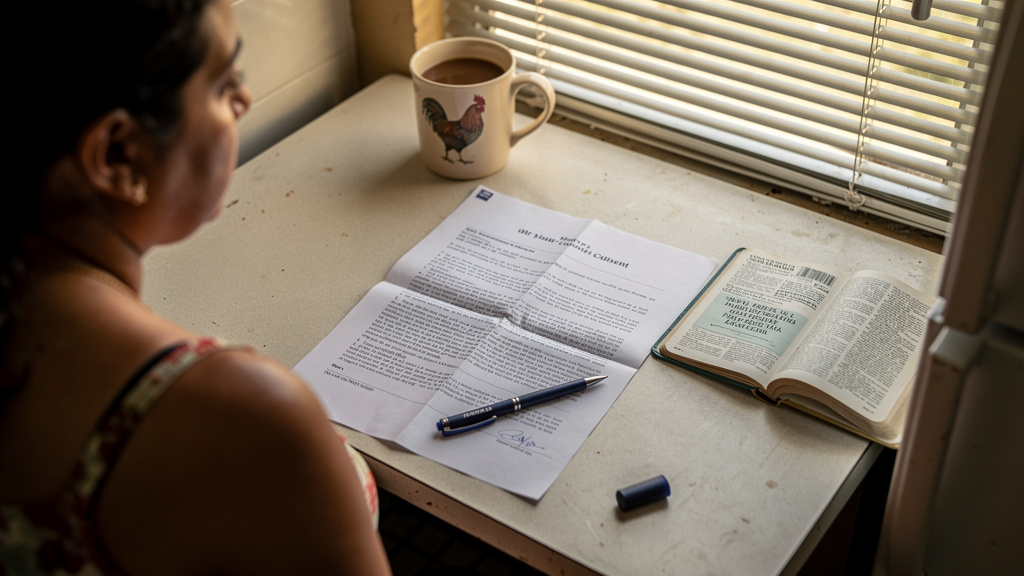
Signing a consent form does not erase your right to sue if the procedure was performed negligently or if you were never given a meaningful explanation in a language you understand. Under Florida’s medical consent law (Fla. Stat. § 766.103), the explanation must give a reasonable person a general understanding of the procedure, its alternatives, and its substantial risks, and a signature alone does not show that this happened. If you received no Spanish explanation and no interpreter, the consent form may be legally insufficient, and harm caused by substandard care can still support a claim.
What is informed consent, and what was the hospital required to explain to me?
Informed consent means your doctor had to explain the nature of the treatment, its substantial risks, and any medically acceptable alternatives before you signed anything. A piece of paper handed to you in English while you sat in a Hialeah clinic waiting room may not meet this standard if you speak only Spanish. Florida law states that a reasonable person, given the information provided, must have a general understanding of these three elements. That standard applies whether you were at Hialeah Hospital, Palmetto General, or Jackson Memorial. Your signature proves you held the pen, not that you understood the words on the page.
Does my signature on the consent form mean I gave up my right to sue?
No. A consent form cannot shield a provider from liability for negligence. If a surgeon operated on the wrong site, a nurse gave the wrong medication dose, or vital signs were ignored during surgery, those are failures of care, not known risks you agreed to accept. Under Florida’s medical consent law (Fla. Stat. § 766.103), a signed consent form is presumed valid when the explanation behind it met the law’s requirements, so the key question is whether the disclosure was adequate and understandable. If no one explained the form in Spanish and no qualified interpreter was used, you may show that you never truly understood what you were agreeing to.
Did the hospital have to give me a Spanish interpreter, and what happens if it didn’t?
Hospitals that receive federal funding, such as Medicare or Medicaid, including Hialeah Hospital, Palmetto General, and Jackson Memorial, may be required under Title VI of the Civil Rights Act and Section 1557 of the Affordable Care Act to provide free, qualified interpreter services. Using an untrained family member, a bilingual front desk worker with no medical training, or no interpreter at all may fall short of that obligation. Under Florida’s medical malpractice standard, what a reasonably prudent provider would do in Hialeah may include communicating effectively with Spanish-speaking patients. Failure to do so may support both a state malpractice claim and a federal nondiscrimination claim.
When does a missing explanation become medical negligence?
You may have a claim if three things are true: the provider withheld a material risk or alternative treatment, a reasonable patient with full information would have made a different choice, and that undisclosed information or negligent act caused actual harm. A bad outcome that was already disclosed is usually not malpractice. But if the explanation never reached you because it was only in English, then the question becomes whether a reasonable Spanish speaker in Hialeah could have understood enough to make a real decision. Both failure to obtain valid consent and careless performance of the procedure can exist in the same case.
What should I save right now, and how do I get my medical records?
Save everything: the consent form, notes about who handed it to you and in what language, names of anyone who tried to translate, witness names, text messages or voicemails from the provider, photos of injuries, and discharge instructions. Then request your complete medical record in writing under Fla. Stat. § 456.057 (hospital records are covered by Fla. Stat. § 395.3025). Ask for physician notes, operative reports, anesthesia records, nursing logs, and all communications, not just the consent form. Keep a copy of your request and note the date you sent it. Providers must respond within a legally defined window, and attorneys need the full chart to see what was promised versus what actually happened.
How long do I have to act, and what happens before a lawsuit is filed?
Florida requires a formal presuit process before filing a medical malpractice lawsuit. You must serve a notice of intent on every potential defendant, supported by a verified opinion from a qualified medical expert. A 90-day investigation period then begins, during which the statute of limitations is paused. Generally, you have two years from the date you knew or should have known about the injury to begin this process. There is also a longer outer deadline that can cut off claims even if the injury was not discovered, with limited exceptions for fraud or concealment. Because you need an expert before filing, waiting too long makes building your case much harder.
Frequently asked questions
Can I still sue if I signed the consent form but no one explained it to me in Spanish?
Yes. A signature alone does not prove you understood the risks. If no Spanish explanation or qualified interpreter was provided, the consent may be legally invalid, and you can still pursue a claim for negligence.
Is the hospital required to provide a Spanish interpreter in Hialeah?
Hospitals that accept federal funds may be required to offer free, qualified interpreters under federal law. In a majority Spanish-speaking city like Hialeah, failing to provide one may breach both federal obligations and Florida’s standard of care.
What is the difference between an informed consent claim and a regular medical malpractice claim?
An informed consent claim focuses on whether you were properly told about risks and alternatives before agreeing to treatment. A malpractice claim addresses whether the care itself met professional standards. Both can apply in the same case.
How do I get a copy of the consent form and my full medical chart?
Submit a written request under Fla. Stat. § 456.057 (or Fla. Stat. § 395.3025 for hospital records) asking for your complete medical record. Include all notes, reports, and communications. Keep a copy of your request and the date you sent it.
Does it matter that the procedure had a bad outcome but I wasn’t actually told it could happen?
It matters if the risk was material and a reasonable patient would have declined the procedure with that knowledge. If you never understood the form due to the language barrier, that may support a claim that valid consent was never obtained.
Hurt in an accident in Hialeah? Call Wolfson & Leon at 305-965-3766 for a free consultation. We speak Spanish, and there is no fee unless we win.
Key facts
- Under Florida's medical consent law, a signed written consent is presumed valid when the explanation behind it met the law's requirements, and a signature does not excuse negligent performance of the procedure. Source: Fla. Stat. § 766.103
- Under Florida's medical consent law, the information provided must give a reasonable person a general understanding of the procedure, its substantial risks, and its medically acceptable alternatives. Source: Fla. Stat. § 766.103(3)
- Hospitals that receive federal funding, such as Medicare or Medicaid, may be required to provide free, qualified interpreter services to patients with limited English proficiency; failure to do so may support both state malpractice and federal nondiscrimination claims. Source: Wolfson & Leon
- Patients have a right to request and receive copies of their complete medical records, including consent forms, operative notes, and physician communications. Source: Fla. Stat. § 456.057; Fla. Stat. § 395.3025
- Before filing a medical malpractice lawsuit in Florida, a claimant must serve formal notice of intent and complete a mandatory presuit investigation period; missing this step can result in dismissal. Source: Fla. Stat. § 766.106
Frequently asked questions
Can I still sue if I signed the consent form but no one explained it to me in Spanish?
Yes, you may still have a claim. A signature does not automatically prove you understood what you were agreeing to. Under Florida's medical consent law (Fla. Stat. § 766.103), the explanation must give a reasonable person a general understanding of the procedure, its risks, and its alternatives, and if no one explained those things to you in a language you understand, the consent may be legally insufficient. An attorney can review the facts of your specific situation and determine whether a claim exists.
Is the hospital required to provide a Spanish interpreter in Hialeah?
Hospitals that receive federal funding, such as Medicare or Medicaid, may be required to provide free, qualified interpreter services to patients with limited English proficiency under federal law, including Title VI of the Civil Rights Act and Section 1557 of the Affordable Care Act. Florida administrative rules may impose additional obligations. Whether a specific hospital met those obligations in your case is a fact-specific question that an attorney should evaluate, particularly if the absence of an interpreter prevented you from understanding your procedure.
What is the difference between an informed consent claim and a regular medical malpractice claim?
An informed consent claim focuses on what you were told before the procedure, whether the provider disclosed the material risks, alternatives, and nature of the treatment in a way a reasonable patient could understand. A malpractice claim focuses on how the procedure was performed, whether the provider met the standard of care during treatment. Both can arise from the same incident: a provider can explain risks correctly and still perform the procedure carelessly, or can perform the procedure skillfully but never obtain valid consent. In a language-barrier situation, both types of claims may apply.
How do I get a copy of the consent form and my full medical chart?
Under Fla. Stat. § 456.057 (and Fla. Stat. § 395.3025 for hospital records), you have the right to request and receive copies of your complete medical records, including the consent form, physician notes, operative reports, anesthesia records, and nursing notes. Submit your request in writing, keep a copy, and note the date you sent it. Request the full chart, not just the consent form, because attorneys compare the complete record against what you were told to evaluate your claim.
Does it matter that the procedure had a bad outcome but I wasn't actually told it could happen?
It can matter significantly. If a serious complication occurred that was never disclosed to you, and a reasonable patient who had been told about that risk would have made a different decision, you may have an informed consent claim regardless of whether the procedure itself was performed carefully. The key question is whether the missing information would have changed your choice and whether the undisclosed risk is what caused your harm. This is a fact-specific analysis that requires review of your records and, typically, an opinion from a medical expert.
This article is general information about Florida law, not legal advice, and reading it does not create an attorney-client relationship. Every case is different and past results do not guarantee a similar outcome. For advice about your situation, call Wolfson & Leon at 305-965-3766 for a free consultation.
Also available in: Versión en español