
Rear-Ended in Florida: Are They Automatically at Fault or Not?
Usually, but not automatically. Florida courts start with a rebuttable presumption that the rear driver was negligent, but insurers can challenge that presumption by arguing you stopped suddenly without warning, had broken brake lights, or cut into the lane just before impact. Your job, and your attorney's, is to lock in evidence before that challenge gains traction.
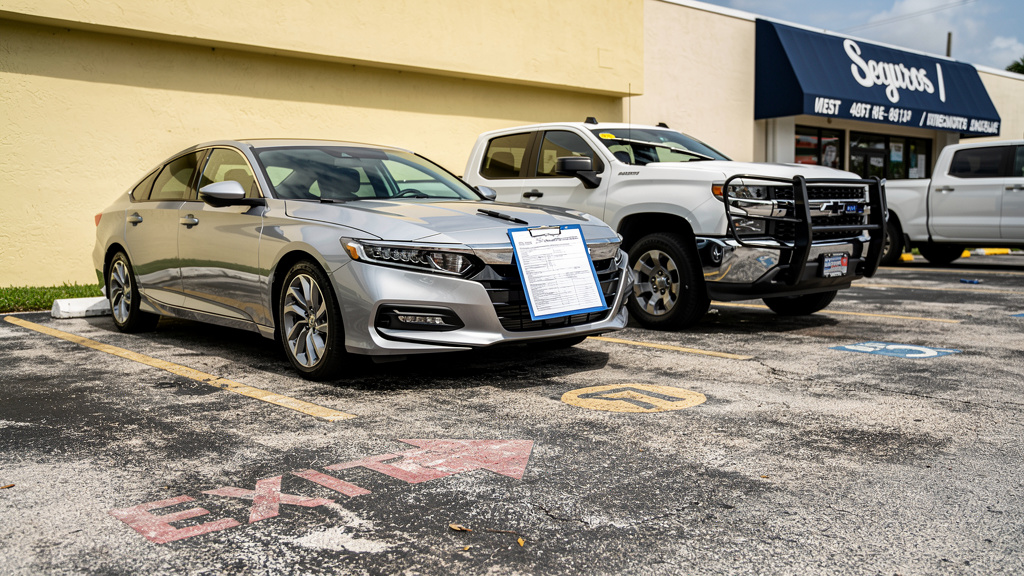
Rear-ended in Florida? The other driver is usually at fault, but not automatically. Florida law starts with a rebuttable presumption that the rear driver was negligent, meaning they must explain why the crash happened. Insurers often challenge this by claiming you stopped suddenly, had broken brake lights, or cut into their lane without warning. Your best defense is gathering clear evidence right away, before their version takes hold.
So they hit me from behind, isn’t fault already settled?
Many people believe “If you are rear ended, it’s ALWAYS the other person’s fault.” That is not how Florida law works. Courts generally apply a rebuttable presumption of negligence against the rear driver, based on case law rather than a specific statute. This means the rear driver carries the burden to show you contributed to the crash. Florida courts, including the Florida Supreme Court in Birge v. Charron, have indicated that when the rear driver offers evidence explaining the crash, such as a sudden, unexpected stop, fault can become a question for the jury. The presumption gives you an initial legal advantage, but it is not a final ruling. If you assume fault is automatic and delay collecting evidence, you risk letting the insurer build a stronger counter-narrative.
What defenses will the other driver’s insurer actually raise against me?
Insurers often try to shift some blame to you to reduce what they pay. Three common arguments: you stopped suddenly without warning, your brake lights were out, or you made an unsafe lane change just before impact. A sudden stop at a red light on Okeechobee Road, where signals cycle quickly and traffic backs up unpredictably, might seem normal, but insurers may argue you braked too late or without signaling. Similarly, abrupt merges onto the Palmetto Expressway (SR 826) from local streets like East 10th Avenue can lead to last-second braking that insurers label reckless. Even if their argument is weak, getting assigned 20 percent fault cuts your recovery by 20 percent, and being pushed above the 50 percent threshold would wipe out compensation entirely.
Does sharing any blame mean I walk away with nothing?
No. Under Florida’s modified comparative fault rule (Fla. Stat. § 768.81(6)), you can still recover damages as long as you are found 50 percent or less at fault. For example, if your total losses are $100,000: no fault means you recover $100,000; 20 percent fault means $80,000; 50 percent fault means $50,000. Only if you are found more than 50 percent at fault do you get nothing. This changed in March 2023 under HB 837, which replaced Florida’s old pure comparative negligence system (where you could recover even at 90 percent fault). Because partial fault now matters more, insurers may look for reasons to assign you some blame. If an adjuster suggests you share responsibility, you do not have to accept that characterization.
Does fault determine whether my PIP insurance pays?
No. Personal Injury Protection (PIP) is no-fault coverage, it pays regardless of who caused the crash. Florida requires $10,000 in PIP, which covers 80 percent of reasonable medical bills and 60 percent of lost wages if a doctor diagnoses an emergency medical condition (up to $10,000); otherwise, it covers only up to $2,500 (Fla. Stat. § 627.736). But you must see a doctor within 14 days of the crash or lose all PIP benefits. If you were hit as a pedestrian or cyclist, your own PIP pays first, then a resident relative’s PIP, and the striking vehicle’s PIP only if neither exists and you are a Florida resident (Fla. Stat. § 627.736(4)(e)). PIP handles initial bills, but to recover pain and suffering from the at-fault driver, you must meet Florida’s serious injury threshold: permanent injury, significant scarring, permanent loss of function, or death (Fla. Stat. § 627.737(2)).
What should I do, and not say, right after the crash?
Avoid saying “I’m sorry” or “I didn’t see you”, even casually. Those words can be twisted into admissions of fault under Florida’s comparative negligence system. Instead, follow what the law requires: exchange name, address, vehicle registration, and insurance information (Fla. Stat. § 316.062). If the other driver cannot produce insurance, call police immediately. Always get a crash report number, even if the other driver insists it was “minor.” Then collect evidence: photograph the other car’s rear brake lights to check if they worked, snap shots of vehicle positions and road markings, and ask nearby businesses along W 49th St in Hialeah for camera footage. Auto shops, fast-food spots, and retail stores often record over security video after a limited time, so act fast.
What evidence from the crash report and local cameras actually protects your claim?
The Hialeah Police crash report includes a narrative, diagram, and officer-assigned contributing factors. Adjusters rely on it heavily, but it is not admissible in court, it can be corrected with better evidence. You, your insurer, and your attorney can access the report right away, but the public cannot for 60 days (Fla. Stat. § 316.066). Dashcam or business camera footage is far more valuable because it shows exactly what happened. Along W 49th St, many storefronts capture road-level views. At complex spots like the Okeechobee Road and SR 826 merge zones, traffic cameras may exist, but availability varies. Back up dashcam footage to cloud storage immediately; loop recording can erase critical seconds within hours.
Frequently asked questions
The car behind me was pushed into me by a third car. Who is actually at fault?
Generally, the third car, the one that caused the chain reaction, is primarily liable. But insurers may argue the middle driver failed to maintain safe distance. Evidence like dashcams or traffic footage is crucial to show the sequence clearly.
The other driver’s insurer says the impact was minor and my injuries aren’t serious. What can I do?
Impact severity does not dictate injury severity. Soft-tissue injuries like whiplash often appear days later. Get a full medical evaluation within 14 days to protect PIP and document your condition. Never let an adjuster decide your injury isn’t valid.
She couldn’t find her insurance at the scene. Do I still have a case?
Yes. Call police, get a report, and note her license plate and vehicle details. Her lack of proof doesn’t negate your claim. You may need to pursue her later through her insurer or use your own uninsured motorist coverage if available.
Does saying sorry at the scene hurt my claim?
Yes. Even a polite “sorry” can be recorded as an admission of fault. Stick to exchanging required information and avoid discussing how the crash happened.
I don’t have broken bones. Do I still have a claim worth pursuing?
Yes. Many serious injuries, nerve damage, herniated discs, chronic pain, are not fractures. If your injury meets Florida’s serious injury threshold (permanent, significant, or scarring), you may pursue pain and suffering. Start with medical documentation within 14 days.
Related reading: I was in a car accident in Hialeah. What do I do now? · The driver who hit me in Hialeah has no insurance. What now? · The 14-day PIP rule in Florida: what happens if you wait to see a doctor after a Hialeah car accident · How long do I have to file an injury lawsuit in Florida? The two-year rule after HB 837
Hurt in an accident in Hialeah? Call Wolfson & Leon at 305-965-3766 for a free consultation. We speak Spanish, and there is no fee unless we win.
Key facts
- Florida's rebuttable presumption of negligence against the rear driver comes from Florida case law rather than a single written statute, and it can generally be overcome with evidence. Source: Wolfson & Leon
- Under modified comparative fault, your recovery is reduced by your own percentage of fault and barred entirely only if you are found MORE THAN 50 percent at fault. Source: Fla. Stat. § 768.81(6)
- PIP pays 80 percent of reasonable medical bills and 60 percent of lost income regardless of who caused the crash, but you must seek treatment within 14 days or PIP pays nothing. Source: Fla. Stat. § 627.736
- The crash report is confidential for 60 days after the crash except to the parties, their insurers, and their attorneys. Source: Fla. Stat. § 316.066
- You must exchange name, address, vehicle registration, and insurance information at the scene after a crash. Source: Fla. Stat. § 316.062
Frequently asked questions
The car behind me was pushed into me by a third car. Who is actually at fault?
In a chain-reaction crash, the driver who started the chain, typically the rearmost vehicle, is often the primary responsible party. The driver pushed into you may not be at fault at all if they had no ability to avoid the impact. Florida's comparative fault rules allow fault to be divided among all contributing drivers, including non-parties under Florida's Fabre doctrine. An attorney can help identify every responsible driver, which matters because each one may have separate insurance coverage.
The other driver's insurer says the impact was minor and my injuries aren't serious. What can I do?
The insurer's characterization of impact severity does not determine your legal rights. Florida law allows you to pursue a bodily injury claim against the at-fault driver if your injuries meet the serious-injury threshold, permanent injury, significant permanent loss of a bodily function, or significant permanent scarring or disfigurement, regardless of the dollar amount of vehicle damage. Consistent medical records, imaging results, and a treating physician's opinion carry far more weight than the adjuster's estimate of the repair bill. Do not accept a lowball offer before reaching maximum medical improvement.
She couldn't find her insurance at the scene. Do I still have a case?
Yes. A driver's inability to produce their insurance card at the scene does not mean they are uninsured or that you have no claim, it is a separate violation from the crash itself. Call police so there is an official report, and get the other driver's name, address, and license plate number as required under Fla. Stat. § 316.062. If the driver turns out to be uninsured, your own uninsured motorist (UM) coverage, if you purchased it, can cover your injuries under Fla. Stat. § 627.727. UM coverage is optional in Florida and must be rejected in writing, so check your own declarations page.
Does saying sorry at the scene hurt my claim?
It can. Any admission of fault or apology at the scene can be cited by the other driver's insurer as evidence that you acknowledged contributing to the crash, which feeds directly into a comparative fault argument. Express concern for anyone who is hurt, but do not discuss what happened, who was at fault, or apologize. Save all factual accounts for the police officer and, later, your attorney.
I don't have broken bones. Do I still have a claim worth pursuing?
Possibly. PIP covers your medical expenses and a portion of lost wages regardless of injury severity, so that benefit applies no matter what. To pursue a pain-and-suffering claim against the at-fault driver, Florida requires a permanent injury, significant permanent loss of a bodily function, or significant permanent scarring or disfigurement under Fla. Stat. § 627.737(2), broken bones are not the standard. Soft-tissue injuries, nerve damage, and disc injuries can meet that threshold if properly documented by a treating physician. Consistent treatment records from shortly after the crash are critical.
This article is general information about Florida law, not legal advice, and reading it does not create an attorney-client relationship. Every case is different and past results do not guarantee a similar outcome. For advice about your situation, call Wolfson & Leon at 305-965-3766 for a free consultation.
Also available in: Versión en español
 Car accidents
 Yes, Hialeah Car Accident Lawyers Handle Rear-End Crashes, Here Is How
Yes, rear-end collisions are among the most common cases handled by car accident lawyers in Hialeah, and the attorneys at Wolfson & Leon, located at…
 Car accidents
 5 Myths About What an Accident Lawyer in Miami Actually Charges
Personal injury lawyers in Miami handle accident cases on a contingency fee basis, no upfront payment, no hourly bill, and no fee at all unless they…
 Car accidents
 No License or Papers? You Can Still File a Florida Car Accident Claim
In general, neither your immigration status nor the absence of a driver's license automatically prevents you from seeking compensation for injuries…